

Introduction
The 21st century world, built on information, technology, and strategic thinking, has led to the development of new tools and methods as conventional diplomacy between states has become limited for countries aiming to outpace others in a multi-polar environment and carve out a preferential position in the global system.
Diplomacy does not remain static; its tools and practices change with time, yet diplomacy’s main purpose of resolving differences remains consistent. The evolving global environment, advances in technology, new forms of communication have been prompting actors to draft strategies to navigate the new realities. This environment brings about both opportunities and challenges while states attempt to maintain a positive image and strengthen their soft power at international level. In line with new strategies that evolved based on globalization, the states now adopt policies to influence foreign publics in an effort to achieve their foreign policy objectives. The growing significance of the capability to influence people around the world has made public diplomacy an indispensable aspect of foreign policy and an instrument to effectively communicate the values, culture, policies, and interests of the state to the larger masses.
To examine the public diplomacy ecosystem of Türkiye, a qualitative research method has been applied. Regarding this method, Creswell highlights that “qualitative research begins with assumptions, a worldview, the possible use of theoretical lens and the study of research problems inquiring into the meaning individuals or groups ascribe to a social or human problem.”1 Accordingly, during the research, the collection of data is analyzed inductively, and it establishes patterns. Complex description and the interpretation of the problem is presented in the final report.2 Creswell underlines that qualitative research is used when a complex, detailed understanding of the issue is desired, when the researcher works in a flexible way, or when the researcher aims to comprehend the context.3
To analyze the current public diplomacy ecosystem of Türkiye, this paper presents main descriptions of the concepts including public diplomacy and nation branding. Focusing on the developments in the field of public diplomacy, Türkiye’s public diplomacy actors are introduced, and their fields of activities are examined with the aim of presenting a picture of Türkiye’s modern public diplomacy efforts and the institutionalization process. Türkiye’s efforts in the field of public diplomacy such as international broadcasting and cultural diplomacy are presented through the concept of nation branding.
In today’s world, public diplomacy is a process in which information and communication technologies play a pivotal role, and the masses are active subjects of its practices, capable of changing outcomes
The data regarding the activities of public diplomacy actors are compiled from open sources of the institutions. Finally, based on the described concepts, this paper suggests prioritizing the “New Public Diplomacy” approach in Türkiye’s public diplomacy strategies, as it emphasizes two-way communication and relationship building and would pave the way for achieving the goal of ‘Strengthening the Türkiye Brand.’
Public diplomacy is not a propaganda type unilateral process, it is a process that necessitates building mutual relations, forging engagement, and helping states communicate with foreign communities.4 In narrow terms, public diplomacy is the sum total of understanding, informing, and influencing the public.5 In a broader term, public diplomacy is a relation-building method developed to gain insight into the needs, culture, and people of other states, communicate messages, correct misconceptions, and find a ground for common goals. Furthermore, public diplomacy aims at positive relations developed by state and non-state actors with the people of other states.6 Public diplomacy is also tackled under the umbrella of strategic communication. In this sense, public diplomacy actions can be described as presenting true insight into a country, informing foreign publics, and ultimately transforming their attitudes and behaviors through influencing.7
Countries boost their reputation and manage their relations around the globe, relying on soft power elements. In his book Bound to Leаd released in 1990, Joseph Nye divides the powers of countries into two: hard and soft power. He argues that soft power is the capability to shape the preferences of others by attraction rather than coercion. Thanks to the soft power elements based on political values and foreign policy in addition to culture, education, art, and sports, the states intend to achieve their goals in global politics, make a good impression on the people of other states, and have them adopt the values they defend.8
In today’s world, public diplomacy is a process in which information and communication technologies play a pivotal role, and the masses are active subjects of its practices, capable of changing outcomes. In practice, it is rebuilt as a communication strategy, with cooperation playing a central role among business communities, non-governmental organizations, and international and transnational corporations, in addition to states.9 In this sense, John Kelley’s perspective, which refers to three different categories as “informing,” “influencing,” and “bonding,” offers significant insight into public diplomacy practices and needs. Kelley argues that public diplomacy can be accomplished through an “information” process that is either reactive or proactive, involving the management and dissemination of information in the face of various crises and events that unfold in the short term. “Influencing,” which is a proactive instrument, is carried out to persuade the target audience and achieve change in behaviors. The “bonding” aspect, which requires building long-term relations, is achieved through transparent communication involving certain key actors, which constitutes the process of building mutual trust and understanding in public diplomacy.10
The term public diplomacy was coined by Edmund Gullion, Dean of the Fletcher School of Law and Diplomacy, in the mid-1960s.11 Its scope has evolved with global developments and countries employ various aspects of public diplomacy elements today. Professor of Public Diplomacy, Nicholas J. Cull, points out that the listening, advocacy, cultural diplomacy, exchange, and international broadcasting are the main components of public diplomacy.12 He indicates that understanding the target audience, engaging with them to promote policies and cultural values as well as forging relationships are essential for public diplomacy efforts. In relation to the objectives of public diplomacy efforts, Mark Leonard underlines that public diplomacy aims to build relationships, correct misconceptions, understand foreign cultures and people.13
In its capacity as a coordinating body, the Directorate of Communications is intended to bring together all public agencies and organizations that individually operate in the realm of public diplomacy in Türkiye and execute and coordinate effective, result-oriented, and well-planned public diplomacy
Melissen stresses that “The new public diplomacy moves away from –to put it crudely– peddling information to foreigners and keeping the foreign press at bay, towards engaging with foreign audiences.”14 He underlines that conveying information to the audience is not efficient for public diplomacy efforts to be successful. Two-way communication and engagement with the audience is essential in today’s international environment. Melissen also points out that states are not the only actors in the field; NGOs carry out public diplomacy efforts as well. Therefore, their contributions and efforts need to be considered. He states that “in the field of public diplomacy different types of actors can learn vital lessons from each other.”15 Considering today’s evolving information environment and digital threats such as disinformation and malign operations, enhancing dialogue and engagement with various audiences and actors are more important than ever.
Developed by all relevant organizations, but particularly the Directorate of Communications, the public diplomacy policies in Türkiye are intended to combine information, strategic communication, and soft power elements in order to upgrade them in line with the circumstances and technological innovation. Furthermore the aims are to forge relationships in interactions with the target audience based on trust, build resilience against evolving digital threats, strengthen the Türkiye brand, and develop promotion policies reflecting Türkiye’s unique values. Involving various theories and practices of public diplomacy, this new framework also points to the evolution and deepening of the concept of public diplomacy in Türkiye.
When the Turkish Republic celebrated its 100th anniversary in 2023, President Recep Tayyip Erdoğan highlighted the objectives of the “Century of Türkiye,” putting emphasis on public diplomacy as one of the main instruments of communication. This indicates the significance attached to the institutionalization in this field.16 The principle of ‘Strengthening the Türkiye Brand’ constitutes the focal point of Türkiye’s public diplomacy efforts.17 Based on the principle, Türkiye develops holistic communication strategies and adopts public diplomacy practices reflecting Türkiye’s enterprising and humanitarian foreign policy. Before examining the principle of ‘Strengthening the Türkiye Brand,’ a background of Türkiye’s public diplomacy efforts and the process of institutionalization will be presented in the next section.
Institutionalization of Türkiye’s Public Diplomacy Efforts
As noted in the introduction, public diplomacy efforts involve engagement with foreign publics with the aim of either influencing or attracting them. In the 2000s, essential efforts were made in Türkiye to transform public diplomacy practices into a more institutional form that constitutes various aspects. As Türkiye has grown into a country that adopts an active stance on foreign policy and takes steps for ensuring regional and global peace, it continues to increase emphasis on relations with regional and international organizations on the one hand while attaching importance to the development of cultural relations and international campaigns of promotion on the other.
Türkiye took the key step of building an institutional structure that would drive forward its potential to make effective use of its public diplomacy instruments and capabilities and founded the Public Diplomacy Coordination Office (PDCO) within the body of the Directorate General of Press and Information (BYEGM) of the Prime Minister’s Office in 2010. Entrusted with the coordination of steps in the field of public information taken by a variety of agencies and organizations, the PDCO held a key position in handling and implementing public diplomacy in an institutional fashion.18 Upon the transition to the Presidential System of Government on July 24, 2018, BYEGM was replaced by the Presidency’s Directorate of Communications, which has a wider operational capacity. Established within the body of the Presidency’s Directorate of Communications, entrusted with taking public diplomacy actions based on a comprehensive strategy, the Department of Public Diplomacy replaced the PDCO as one of the main bodies with a major role in the execution and coordination of public diplomacy actions taken by Türkiye.
The branding process seems to be implemented with the intention of utilizing all forms of communication, as well as public diplomacy instruments, methods, practices, and techniques, to effectively promote Türkiye and enhance its reputation in a manner that serves its interests
The Directorate of Communications is entrusted with the mission to: “communicate the policies of Türkiye to the international community as part of strategic communication, make use of public diplomacy instruments and methods for the delivery of accurate information to the international community, guiding actions for international promotion, and partnering with public agencies and organizations, universities, and non-governmental organizations that work on public diplomacy.”19 Taking actions to strengthen the nation brand, the Presidency’s Directorate of Communications and the Department of Public Diplomacy established within its body serve as both a coordinating and executive body.
The Directorate of Communications is entrusted with developing, implementing, and coordinating public diplomacy policies; among the main organizations mandated to develop and implement public diplomacy policies are the Ministry of Foreign Affairs and the Ministry of Culture and Tourism, the Turkish Cooperation and Coordination Agency (TİKA), which boosts Türkiye’s soft power, the Presidency for Turks Abroad and Related Communities (YTB), Yunus Emre Institute (YEE), Disaster and Emergency Management Authority (AFAD), Turkish Red Crescent, Turkish Mаarif Foundation, the Turkish Radio and Television Corporation (TRT) and Anadolu Agency (AA). Foundations such as Türkiye Diyanet Foundation as well as NGOs engage in public diplomacy activities contributing to the strengthening of Türkiye’s soft power. Additionally, Türkiye views each public agency and organization as a part of the public diplomacy universe and describes them as an implementing partner.
The coordination of steps taken by the aforementioned actors is of significance for institutionalization and the establishment of a systemic and efficient public diplomacy ecosystem. The Directorate of Communications plays a central role in achieving this coordination. In its capacity as a coordinating body, the Directorate of Communications is intended to bring together all public agencies and organizations that individually operate in the realm of public diplomacy in Türkiye and execute and coordinate effective, result-oriented, and well-planned public diplomacy. As part of its mission, the Directorate sets in motion plans and practices that provide coordinated actions with all agencies and organizations to effectively utilize the institutional capacity to be guided by Türkiye’s public diplomacy.
ADF is a unique event that not only boosts the influence of Turkish diplomacy on the ground and at the table but also brings together international decision-makers, fostering dialogue and providing opportunities for consultation and exchange of views
To this end, the Department of Public Diplomacy, which is tasked with overseeing and coordinating public diplomacy activities under the Directorate of Communications, has established the Public Diplomacy Coordination System (PDCS). Moreover, adopting a participatory style, Public Diplomacy Coordination Mechanism (KADİS) was established to ensure that public diplomacy actions led by various ministries, agencies, and organizations are taken swiftly, efficiently, and effectively. It covers the National Public Diplomacy Strategy Document and Action Plan and the Public Diplomacy Monitoring System (KADİZ).20 The coordination mechanism consists of the Public Diplomacy Coordination Board and the Public Diplomacy Committees. Convening once a year under the leadership of the Directorate of Communications with the attendance of high-level directors, the Board serves as a consultation mechanism to set and implement the overall framework of the public diplomacy strategy. The Committees meet as needed with the attendance of directors from public agencies and organizations to contribute to the development, implementation, and upgrade of the public diplomacy strategies. Based on the policies developed by the Board and the committees, the National Public Diplomacy Strategy Document and Action Plan was drawn up in 2021 to serve as the first policy document in public diplomacy. The document that turns the public diplomacy of Türkiye into a system and draws up a roadmap for the implementation of the strategies names 21 different aspects of public diplomacy to unearth the soft power potential of Türkiye. In an effort to monitor the projects set out under the National Public Diplomacy Strategy and Action Plan, which offers a framework on how to develop a culture of cooperation among public diplomacy actors in Türkiye, and to see how effective they are, the Directorate has taken an important step to regularly coordinate Türkiye’s actions of soft power by introducing the KАDİZ.21
In fact, the establishment of the Directorate of Communications and the Department of Public Diplomacy has paved the way for institutionalization to rely on a broader and more robust basis for terms of reference. It would be accurate to say that the establishment of the Directorate of Communications marks a turning point in the structure and methods used to develop Türkiye’s public diplomacy ecosystem. Türkiye’s public diplomacy has evolved in a sophisticated nature and been strengthened from the institutional point of view, based on the objectives, mission, and actions of the Directorate. Since 2018, Türkiye began to view its expertise and potential amassed over the years in public diplomacy as a multilateral and multidimensional process.
Principle of ‘Strengthening the Türkiye Brand’ as the Main Determinant of Public Diplomacy Practices in Türkiye
Nation branding, coined by Simon Anholt in 1996, builds relations with new trends and novelties to improve the reputation of a country.22 Szondi argues that nation branding is a process of strategic promotion in an effort to build a reputation capital, promoting economic, political, and social interests at home and abroad.23 The main argument behind nation branding is that when a country transforms into a brand, it generates added value for all of its stakeholders, similar to how a product or commodity generates added value when it establishes itself as a brand.24 As Bloom Consulting explains, “Nation Branding is the systematic and coherent management of perceptions surrounding a country, nation, or city that is inherent of political and social domains.”25 Accordingly, the main purposes of nation branding efforts include; boosting foreign direct investments, attracting talent, forging international exchange and partnerships, supporting development of key sectors including tourism, science and others, strengthening the sense of belonging among citizens.26 It should be noted that nation branding efforts aim to present the vision of the respective country; nation brand is how the country perceives itself and “what a nation wants to be known for externally.”27 Furthermore, nation branding seeks to build narratives based on a country’s national identity, its culture and other assets. Aronczyk highlights tools and techniques of corporate brand management that are used to reflect elements of national identity in nation branding.28
As countries invest in efforts to promote their images, Anholt highlights that what attracts people is genuine assets or values, not mere rhetoric of countries. He underlines that “Don’t tell them to admire you. Be admirable.”29 This indicates that nation branding efforts need to be built on realities to be successful.
Aiming to measure countries’ images at an international level, some surveys are conducted around the world such as the Anholt-Ipsos Nation Brands Index (NBI). Since 2008, partnering with Anholt, Ipsos measures the global perception of countries by examining six aspects of a nation’s identity, which are exports, governance, culture, people, tourism, immigration and investment.30 The exports aspect focuses on the country-of-origin effect. Furthermore, it examines “whether knowing where a product is made increases or decreases the likelihood of it being purchased.”31 Governance refers to the respective country’s perceived competency, respect for citizens’ rights and actions regarding international peace and security. Cultural focuses on the perceptions of a country’s heritage. The people aspect is related to the country’s reputation for openness and friendliness. Tourism measures the level of interest in visiting the country. Finally, immigration and investment examine perceptions of quality of life and business environment in the respective countries.32 It is seen that these various aspects shape people’s perception of a country.
Its geopolitical position, culture and history, long-established diplomatic tradition and diverse and unique soft power make up the core of the public diplomacy actions taken by Türkiye
The NBI survey for the 2023 report was conducted in 20 major advanced and emerging economies which play significant roles in international relations.33 The survey’s respondents were adults aged 18 and over. According to the NBI 2023, the top five countries on the NBI are as follows: Japan, Germany, Canada, United Kingdom, and Italy. Türkiye ranks 37th on the NBI 2023.34
Aiming to increase people’s awareness about the country, Türkiye engages in efforts to promote its national image. In this sense, the branding process seems to be implemented with the intention of utilizing all forms of communication, as well as public diplomacy instruments, methods, practices, and techniques, to effectively promote Türkiye and enhance its reputation in a manner that serves its interests.
The institutional perspective on public diplomacy in Türkiye that would improve and empower the nation brand was first articulated by the Directorate of Communications, and the perspective has been set out under the main objective of ‘Strengthening the Türkiye Brand.’ However, the branding efforts by Türkiye date back to a time earlier than the establishment of the Directorate. Within the scope of its nation branding efforts, Türkiye has adopted a variety of strategies since the early 2000s to tell its story and fully utilize its potential in numerous domains, including tourism and economy in particular. Türkiye kicked off the early branding efforts with a logo design, laying the foundations for the development of visual perception. It was only in 2014 that the branding efforts gained momentum under the campaign called “Turkey Home,” launched by the Ministry of Culture and Tourism. Having launched the campaign on a dedicated portal, the Ministry intended to offer details about history, tourism, and culture, promote various aspects of Türkiye, and echo the hospitality of the country.35 The Ministry of Culture and Tourism currently offers major inputs through the Directorate General of Promotion, which operates within its body, for the nation branding efforts of Türkiye. The Directorate General was established to develop marketing and promotional policies to highlight Türkiye’s historical, cultural, and natural assets at home and abroad so that it can command a larger share of the global travel industry, enhance Türkiye’s standing in the tourism industry worldwide, build a Türkiye brand, increase public awareness of Türkiye’s cultural and tourism assets, and advance the travel culture. In doing so, it boosts the country’s economy through inputs for the tourism industry and helps the culture and assets of Türkiye reach out to a larger mass around the world.36
Furthermore, Türkiye Tourism Promotion and Development Agency (TGA), founded in 2019, carries out promotion, marketing, and communication activities in line with the country’s tourism goals.37 As part of the efforts putting a spotlight on the country’s assets, TGA uses its platform named GoTürkiye. The platform presents the country’s cultural and tourism assets to users who want to get information about Türkiye and its diverse tourism routes.38 The activities and campaigns are presented to the foreign audience through GoTürkiye’s website and its social media accounts. GoTürkiye has over 5 million followers in Facebook, over 3 million in Instagram, and over 3 million in TikTok, highlighting the active use of digital platforms in promotional activities.39 TGA aims to draw attention to authentic aspects of Türkiye’s tourism destinations with its commercial films. “İstanbul Is the New Cool,” “Turkagean: Coast of Happiness,” “Cappadocia: The Land of Fairytales,” “Turkish Black Sea Welcomes You” are some of the commercial films displayed by GoTürkiye.40 These films highlight Türkiye’s tourism capacity and its cultural and natural heritage. The promotion activities serve the purpose of informing foreign audiences about the sustainable tourism in Türkiye and strengthening Türkiye as a tourism brand.
On the other hand, considerable progress has been made in Türkiye for branding through a variety of events, initiatives, and institutional practices organized in recent years. For example, the Antаlyа Diplomacy Forum (АDF), which has been attended by senior officials from governmental and international organizations, opinion leaders, academics, policymakers, media outlets, and private sector members invited by the Ministry of Foreign Affairs since 2021, is one of the remarkable events held by the Ministry and has grown into an international brand that contributes to the effective promotion of Türkiye. ADF is a unique event that not only boosts the influence of Turkish diplomacy on the ground and at the table but also brings together international decision-makers, fostering dialogue and providing opportunities for consultation and exchange of views. As the very first high-level contact between the foreign ministers was made in Antalya during the Russian-Ukrainian crisis, ADF grew into one of the tangible symbols of Türkiye’s crisis management and leadership in regional cooperation. The aforementioned meeting was a landmark for the branding of the Forum.41
These steps taken by Türkiye aiming to enhance its international influence, capability, and reputation and reinforce its means are executed strategically in coordination with the Directorate of Communications. To this end, the Directorate initially conducted diplomacy for the reference and broader use of the phrase “Türkiye” by global media and technology outlets, including international correspondence. Prior to these steps, Türkiye launched a communication campaign in 2014, leading to the replacement of the phrase “Made in Turkey” with “Made in Türkiye,” which is referred to in trade and commerce.42 Furthermore, Türkiye has released the “Türkiye Book” that includes details concerning its foreign policy, communication, media, industry, science, technology, economy, environment, urbanization, climate change, healthcare, transportation, education, tourism, and Turkish cuisine.43
In 2022, the Directorate of Communications also launched “Hello Türkiye” campaign to promote the use of “Türkiye” as the country’s national and international name.44 The promotional video shared on the social media accounts of the Directorate features tourists from different parts of the world, saying “Hello Türkiye.” Such campaigns highlight that the Directorate adopts a 360-degree approach to communication and actively uses digital platforms to contribute to the efforts of strengthening the Türkiye brand.
The Directorate of Communications kicked off the operations of the Türkiye Brand Office in 2022 within its own body to institutionalize all the initiatives and actions of branding with a view to setting and developing the fundamental elements of the nation branding identity of Türkiye and take steps to strengthen the Türkiye brand. Mandated to develop a branding strategy to effectively communicate Türkiye’s story, the Office held the Türkiye Nation Branding Forum, the first nation branding event organized in Türkiye in the year of its inception and made sure that Türkiye brand was discussed in a wide array of scientific, academic, sectoral and socio-cultural aspects.45
In addition, Türkiye builds its image through its domestic brands. In this sense, Turkish Airlines, which is the flagship airline of Türkiye; TOGG, which is the very first domestic and national car; Bayraktar Kızılelma (Red Apple), which is the very first domestic unmanned combat aerial vehicle with a unique design; and İstanbul Airport, which has become the meeting point of the world, are the projects that boost the value of Türkiye as a brand.
Through the recent investments in modern museums, recently built museums, and renovation and restoration efforts, the museums have become professionalized and offered more to promote Türkiye
As noted before, the Directorate of Communications plays a critical role in handling and amplifying the branding efforts of Türkiye in a public diplomacy ecosystem. The Directorate has not only institutionalized the objective of ‘Strengthening the Türkiye Brand’ as part of the office within its own body but also described what this rhetoric stands for, what its objectives are, and what subjects it involves for the roadmap and direction of the public diplomacy actions of Türkiye. Fahrettin Altun, Head of Communications, accounts for the principle of ‘Strengthening the Türkiye Brand,’ which he views as part of the Directorate’s perspective on strategic communication and public diplomacy, as follows:
The Directorate of Communications is the embodiment of institutionalized strategic communication based on the vision of the President. If you ask “what the key function of the Directorate is,” my answer would be: “Further strengthening the Türkiye brand and improving the global reputation of Türkiye.” In this sense, we try to promote Türkiye’s position around the globe to the people of the world, harnessing the means and capabilities of public diplomacy. It is our key function to promote our know-how, positive history, and current opportunities on the one hand and to counter negative arguments, disinformation efforts, and black propaganda attempts by certain circles against Türkiye as part of our actions intended to strengthen the Türkiye brand in line with our public diplomacy policies.46
The Directorate of Communications takes actions in line with the motivation to reinforce Türkiye’s position as a center of attraction, setting in motion its strengths and capabilities in many aspects, including education, healthcare, culture, arts, trade, sports, science and communication, to enhance a positive image of Türkiye, to improve its international reputation and to mitigate disinformation. The actions taken by the Directorate of Communications in this regard include positive communication campaigns and socio-cultural events held in line with Türkiye’s soft power elements, countering disinformation, activities for awareness-raising, hosting of international events, and establishment of relations and cooperation with strategic actors.47 With that being the case, it would not be wrong to argue that public diplomacy, which is built on the main objective of ‘Strengthening the Türkiye Brand,’ does not call for actions based on soft power alone. Furthermore, it is built on a broader, multilateral, and multidimensional form of understanding. Türkiye currently makes efforts to create and sustain a positive image of itself in other countries through soft power elements such as education, technology, culture, innovation, tourism, science, and sports. It communicates the country’s standing on global matters to its counterparts and strives to disseminate accurate information as well. The framework of Türkiye’s public diplomacy aligns with Nye’s concept of soft power but also extends beyond, intertwining with Anholt’s nation branding theories. To enhance its theoretical underpinning, this paper suggests integrating the ‘New Public Diplomacy’ approach, which emphasizes two-way communication and relationship building, thus reflecting the evolving dynamics of global diplomacy. It should be noted that in the face of today’s challenges new public diplomacy elements would contribute to building long-term ties and enhancing mutual understanding.
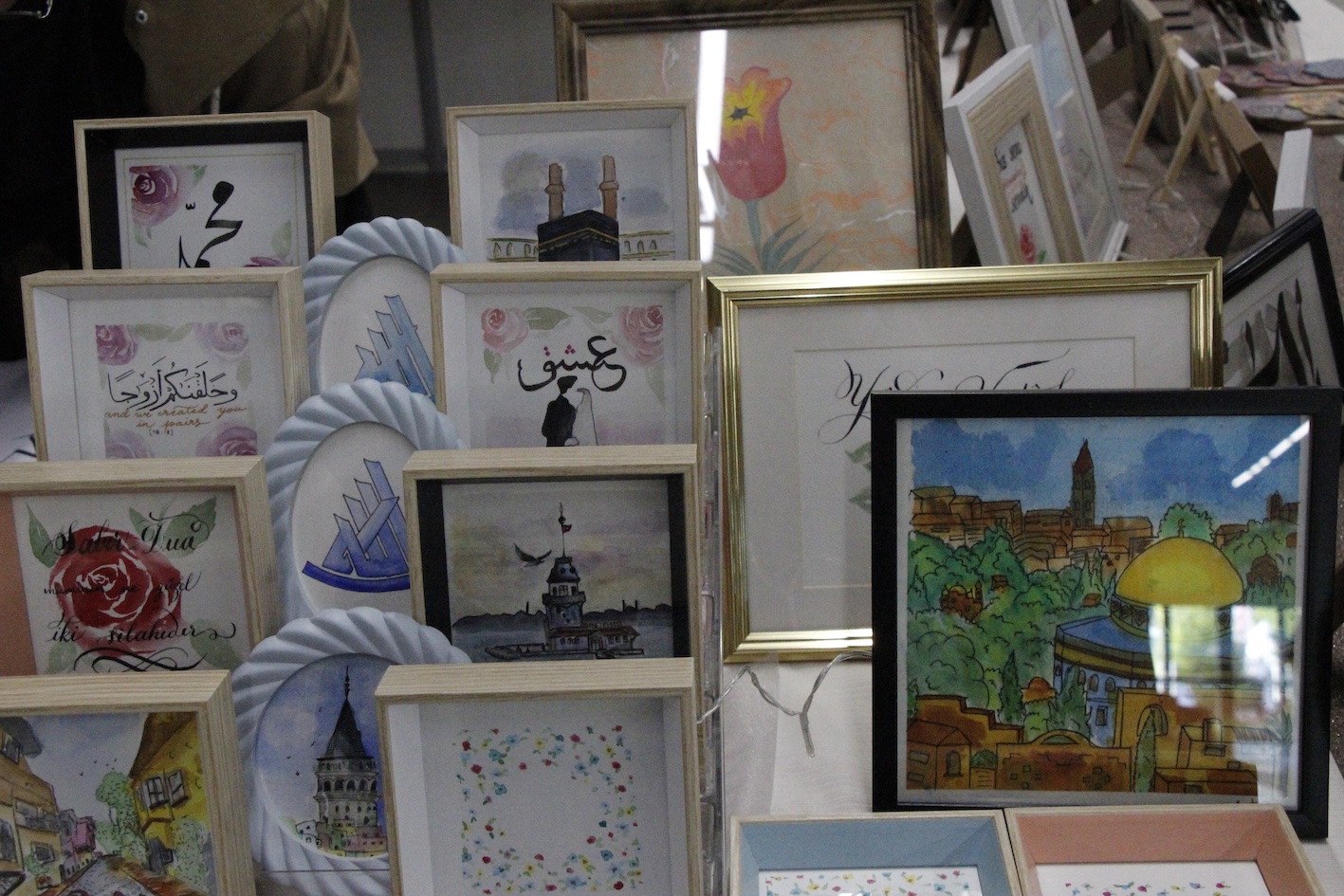
Turkish culture, cuisine, and traditional handicrafts were promoted at the Türkiye Expo festival held in Paris, France, in October 2024. ESRA TAŞKIN / AA
Practices and Actors
Its geopolitical position, culture and history, long-established diplomatic tradition and diverse and unique soft power make up the core of the public diplomacy actions taken by Türkiye. All actors that take public diplomacy actions harness the wide range of soft power elements that Türkiye possesses. As for Türkiye’s opportunities and capabilities in its wide array of public diplomacy practices ranging from culture to energy and healthcare to digital instruments; cultural diplomacy, educational diplomacy, gastrodiplomacy, humanitarian diplomacy, and international publications stand out. The effective promotion of Türkiye abroad and systematic endeavors in this direction stand out as soft power instruments in which the international public is the target audience, in keeping with the overall goal of ‘Strengthening the Türkiye Brand.’
Cultural Diplomacy
Türkiye is situated at a point of attraction and is home to the lands of Anatolia, which have hosted a myriad of civilizations. The foundation of Türkiye’s cultural diplomacy lies in its objective of converting its favorable cultural position into soft power through the effective representation of its narrative and the expression of its civilization. The historical and cultural assets of Türkiye are promoted around the globe through international public diplomacy events held in many aspects, including art, literature, music, tourism, architecture, and cuisine. Among the events are “Turkish Cinema Days,” “Turkish Cultural Days,” “Turkish Festivals,” “Turkish Food Festival,” various exhibitions, concerts, conferences and seminars on culture and the arts, literary days, stage performances, etc.48
The Turkish TV series have contributed a key soft power element to Türkiye’s cultural diplomacy in recent years. Globally ranking second behind the U.S. in exporting TV series following a huge momentum in recent years, the Turkish TV series and movie industry now reach households of nearly 700 million viewers in 156 countries. The export volume of the industry accounts for over $1 billion as of 2023.49 Attracting a huge audience in the Middle East, the Balkans, and Latin America in particular, the Turkish TV series both boost the cultural impact of Türkiye and contribute to the promotion of Türkiye. Being home to the sets of TV series, the cities, particularly İstanbul, geographical assets, and natural wonders grow into a brand. In a similar vein, the lifestyle, preferences and values of the Turkish people are evoking admiration and being adopted by people in various parts of the world.50 As highlighted at the “International Broadcasting” section, public broadcasters play a significant role in presenting a window to the different aspects of the country including its diverse culture. TRT, which produces content in several languages, transcends borders and enables the presentation of Türkiye’s perspective to the foreign audiences.
Situated on the lands of Anatolia, which has been home to many civilizations, Türkiye holds an advantageous position thanks to its archaeological sites, historical heritage, and diverse cultural assets. Inscribed on the United Nations Educational, Scientific and Cultural Organization (UNESCO) World Heritage List in 2023 as a rare site with one of the longest histories of human settlement, the Ancient City of Gordion became the 20th heritage site from Türkiye on the list.51 The inscription of Göbekli Tepe, which is one of the major archaeological discoveries in recent times, as a religious site of worship, on the UNESCO World Heritage List enhances the reputation of Türkiye as a country that attaches importance to cultural values and enjoys a diverse set of heritage sites.52
The museums are another advantage that the historical and cultural assets provide, as they reflect the broad collection of assets in Türkiye. Unique collections, which embody thousands of years of Anatolia’s historical and cultural legacy, play an important role in cultural diplomacy telling Türkiye’s story and creating a brand for the country. The museums now appeal to larger masses thanks to the new approach adopted under the leadership of the Ministry of Culture and Tourism that keep abreast of global innovation and upgraded standards in museology including the efforts for increasing the number and diversification of museums.53
Capable of combining different and various culinary cultures through the advantages of geographic location, climate, and cultural diversity, Türkiye has turned gastrodiplomacy into one of the key soft power elements, relying on its culinary identity with an extraordinary diversity
Through the recent investments in modern museums, recently built museums, and renovation and restoration efforts, the museums have become professionalized and offered more to promote Türkiye. In Türkiye, the number of museums reached to 552 in 2022, showing a 6.4 percent increase compared to 2021 according to the data published by Turkish Statistical Institute (TÜİK) on September 7, 2023.54 In addition, award-winning museums, which are thriving tokens of museology and strengthen the reputation of the country as indicators of Türkiye’s investment in culture and create added value in cultural diplomacy. Apart from museums such as the Museum of Turkish and Islamic Arts, Antalya Museum, İstanbul Archaeological Museums, and Museum of Anatolian Civilizations, some museums, including Troy Museum, Odunpazarı Modern Museum, and Bayburt Kenan Yavuz Ethnography Museum, have received international awards.55 Troy Museum, which is located in northwestern province of Çanakkale, received 2020/2021 European Museum Academy (EMA) Special Mention Award.56 Odunpazarı Modern Museum received Special Commendation in the “European Museum of the Year Awards 2021.”57 In 2022, Bayburt Kenan Yavuz Ethnography Museum received European Heritage Awards/Europa Nostra Award in the category of citizens’ engagement and awareness-raising.58
Türkiye, which has made rapid progress in the last 20 years with regards to institutionalization of its cultural diplomacy, has established new organizations and improved the capacity of the existing organizations. Serving as one of the main implementing partners in cultural diplomacy and playing a leading role in teaching of Turkish language, YEE has promoted the Turkish language, history, culture, and arts since its inception in 2009 through cultural centers based in various parts of the world. YEE, which first started its activities in the Balkans, enables Türkiye’s international cultural policies to assume an institutional identity on a vast land of target audiences, including the Middle East, the Caucasus, Europe, Africa, and the Far East. YEE enhances the recognition of Türkiye through scientific projects, cultural events, and courses that it executes on the one hand and adds to the improvement of interactions with various cultures and the reinforcement of amicable sentiments among the peoples on the other.59
Based on its enterprising and humanitarian foreign policy formulated by the Ministry of Foreign Affairs, Türkiye views the delivery of aid to countries that face challenges because of natural disasters, wars, poverty, and social conflicts as a humanitarian duty and a key component for the stability of the international community
In addition to YEE, YTB and TİKA take steps to improve relations with friendly, brotherly, and cognate countries with which Türkiye has enjoyed historical ties. Increasing the number of program offices across different parts of the world and improving its budget since 2002, TİKA has played a major role in cultural terms, restoring and conserving the shared historical and cultural heritage, in addition to its leading role in humanitarian diplomacy.60 Similarly, YTB is capable of converting its practices in education diplomacy into an asset for cultural diplomacy. In an attempt to achieve the objective of developing relations with the lands that Türkiye has historical and cultural ties with, importance is attached to establishing collaborations with a variety of regional and global organizations. Among the main examples are steps taken for media and communication in recent years under the umbrella of the Organization of Turkic States (OTS) and the Organization for Islamic Cooperation (OIC). The Turkic Council Media Forum was held in 2021 in coordination with the Directorate of Communications under the theme of “Deep-Rooted Past, Strong Future” and the Meeting of the Ministers and High Officials in charge of Media and Information of the OTS was held in İstanbul in 2022. Similarly, the 12th Conference of the Information Ministers of the OIC was organized in İstanbul in 2022 and attended by ministers and high-level representatives from 48 countries.61
Education Diplomacy
Türkiye has engaged in various academic partnerships with universities abroad in line with its education policies and practices and has enhanced its academic influence in various countries through student exchange programs and joint research projects. YTB, one of Türkiye’s leading organizations in education diplomacy, offers means of education, accommodation, and scholarships for international students in a way to cover a vast array of countries under the title of “Türkiye Scholarships” which is one of the most comprehensive scholarship programs and builds bridges between international students and Türkiye. As of 2023, a total of 117,000 students from 162 countries ranging from the Balkans to South Asia and North Africa to the Middle East are the beneficiaries of Türkiye Scholarships.62
Founded in 2016, the Turkish Maarif Foundation is the key strategic step taken by Türkiye in education diplomacy. Providing formal education from preschool to higher education and informal education services abroad, establishing schools and dormitories, training teachers to work for its schools, and releasing scientific publications, the Maarif Foundation adopts a thorough perspective on the dialogue-building efforts of Türkiye through the education of people of various cultures. The students of the Turkish Maarif Foundation’s schools study Turkish as a compulsory course.63 The direct contribution of the Maarif Foundation to the teaching of the Turkish language and to enhancing positive image of Turkish culture, history, arts, and values demonstrates the supportive and complementary actions of public diplomacy actors in Türkiye. The Maarif Foundation is an organization that adopts a sense of public diplomacy in a multilateral fashion, with education taking center stage. To this end, the Maarif Foundation publishes the International Maarif Journal and holds conferences under the title of İstanbul Education Summit. In addition, the Foundation has drawn up the Turkish Maarif Encyclopedia, which is presented as a prestige project.64
Gаstrodiplomаcy
Capable of combining different and various culinary cultures through the advantages of geographic location, climate, and cultural diversity, Türkiye has turned gastrodiplomacy into one of the key soft power elements, relying on its culinary identity with an extraordinary diversity. Inscribed on the UNESCO Creative Cities Network (UCCN), the cities of Gaziantep, Hatay, Afyonkarahisar, and Kayseri have added to the promotion of Türkiye and the tourism in their locality based on gastrodiplomacy that has gained momentum since 2002.65 In addition, products such as Keşkek, Mesir Macunu (Paste), and Turkish coffee, which represent the historical and unique characteristics of Turkish culinary culture, have also been inscribed on the intangible cultural heritage list by UNESCO through diplomatic efforts.66 As coffee serves as an element of gastrodiplomacy in Turkish culture, it was inscribed on the UNESCO Intangible Cultural Heritage list in 2013, and December 5 was declared as “World Turkish Coffee Day.”67 There are also Turkish products registered by the European Union (EU) apart from UNESCO. A total of 24 products, including Gaziantep Baklava, Aydın Fig, Malatya Apricot, Aydın Chestnut, Milas Olive Oil, Bayramiç Nectarine, Taşköprü Garlic, Giresun Hazelnut (Giresun Tombul Fındığı), Antakya Künefe, Suruç Pomegranate, Çağlayancerit Walnut, Gemlik Olive, Edremit Olive Oil, Milas Olive, Ayaş Tomato, Maraş Tarhana, Edremit Bay Green Scratched Olive, Ezine Cheese, Safranbolu Saffron, Aydın Memecik Olive Oil, Araban Garlic, Bingöl Honey, Bursa Peach, Osmaniye Peanuts have been awarded geographical indication.68
Aiming to preserve Turkish cuisine in the long run and effectively promote goods, the Turkish Cuisine Week events have been organized in foreign offices of the Republic of Türkiye and at home from May 21 to 27 every year since 2022 under the leadership of First Lady Emine Erdoğan and in coordination with the Ministry of Culture and Tourism. This helps promotion of the recipes of Turkish cuisine in various parts of the world. Published under the leadership of First Lady Emine Erdoğan in cooperation with the TGA, the book titled “Turkish Cuisine with Timeless Recipes” adds to the effective promotion of the Turkish culinary culture as an ever-lasting body of work.69
Humanitarian Diplomacy
Based on its enterprising and humanitarian foreign policy formulated by the Ministry of Foreign Affairs, Türkiye views the delivery of aid to countries that face challenges because of natural disasters, wars, poverty, and social conflicts as a humanitarian duty and a key component for the stability of the international community. With that being the case, Türkiye contributes to international efforts by delivering humanitarian aid to those in need regardless of their race, religion, language, and gender. A myriad of NGOs, including the Turkish Red Crescent, AFAD, TİKA, and Türkiye Diyanet Foundation, in particular, play an active role in the delivery of humanitarian aid. These organizations strengthen the humanitarian image of Türkiye laying out the value attached to human life through their humanitarian aid and actions in almost every part of the world. Additionally, it is important to tackle the humanitarian efforts of Türkiye as a whole and set in motion projects that would improve efficiency and productivity with various organizations joining their force. In this sense, the project “Kindness Trains,” which has been in effect since 2010 under the leadership of AFAD in cooperation with TİKA, the Turkish Red Crescent, and a variety of NGOs, is a remarkable token of the humanitarian diplomacy.70
The humanitarian aspect of the ongoing crises in neighboring countries such as Syria has been an essential part of Türkiye’s efforts for humanitarian aid in recent years. Growing in global impact by the day, the crises have highlighted Türkiye’s position in the current humanitarian aid system. Hosting nearly 4 million refugees, according to official figures, Türkiye continues to pursue a human-centered policy.71
In addition, Türkiye took action against the coronavirus pandemic, which grew into a global challenge, both at home and around the world and delivered financial and medical aid as part of the actions taken by many states to slow down the spread of the virus and prevent casualties. Foreign aid provided within the scope of fighting the epidemic was a token of Türkiye’s enterprising and humanitarian foreign policy. In this sense, Türkiye extended a helping hand to a total of 157 countries, including those in Africa in particular, as well as Europe, Asia, the Americas, and Oceania.72
As per the principle of ‘Strengthening the Türkiye Brand,’ the objective of presenting Türkiye’s perspective is based on strategic communication and providing of accurate information
Scores of public diplomacy actors played an active role in aid delivery. To this end, TİKA ran almost 200 projects and initiatives in over 70 countries from the Balkans to Central Asia and Latin America to Africa,73 while YTB developed new ideas and projects to create educational, entertaining, and uplifting media content to make effective use of the time spent at home and provide food and accommodation support for those who habitually reside in Türkiye and yet are unable to return to Türkiye because of the pandemic. Türkiye made its soft power felt around the world in the process and put an emphasis on international cooperation and solidarity as part of its efforts and actions since the advent of the outbreak that grew into a global test for all people and attached importance to contacts and talks with the leaders through multilateral and bilateral partnerships and consultations under the umbrella of the United Nations (UN), G20, OTS, MIKTA, IMF, World Bank, and OECD for actions against the outbreak.74
Türkiye has transformed humanitarian diplomacy into an instrument that enhances its global reputation and developed its own model thanks to the discourse and practices developed in humanitarian terms, the operational culture of its organizations, and policies that settle global humanitarian challenges. In an effort to communicate this unique model that Türkiye has built based on humanitarian diplomacy to the international community in an accurate and effective fashion, the Directorate of Communications draws up a variety of visual studies and releases publications such as “Türkiye’s Friendly Hand to Africa,” “Türkiye Model in Humanitarian Aid,” and “Türkiye’s Friendly Hand: Humanitarian Diplomacy.”
International Broadcasting
International radio and television networks and newspapers have grown into the main elements that states rely on to reach out to foreign target audiences, provide information, and prevent disinformation upon the advent of the 20th century. International publications are also the most common instruments of public diplomacy that states use as they create opportunities for promotion, cultural export, and intercultural exchange.
Türkiye takes actions to expand and improve the network of information as part of the public broadcast, and broadcasts international programs with aspects of information and culture via TRT and AA. Providing information to the whole world and holding a global audience with broadcast in 41 languages and dialects, TRT establishes a presence in various parts of the world via TRT Avаz, TRT Arаbic, TRT Kurdi, TRT Russian, TRT Deutsch, TRT Frаnçаis, and TRT Bаlkаn channels, in addition to TRT World and TRT World Rаdio in particular. In 2024, TRT also launched its Spanish-language digital news platform aiming to amplify Türkiye’s voice at the international level.75 The new channel’s slogan, the “Place Where People Matter,” reflects the human-centered approach and the target of forging new ties with Spanish-speaking countries. TRT is planning to launch a TRT Farsi channel in the near future.76 These efforts highlight the aim of presenting a window to Türkiye, shining a light on its culture, values and points of view. Reaching out to foreign publics and presenting Türkiye’s perspectives can be considered an indispensable part of the efforts aimed at promoting the country. These channels are also expected to contribute to the diversity in the field of international broadcasting.77
TRT assumes a role in public diplomacy through not only its own broadcast but also events that gather global actors. To this end, TRT has been holding the International TRT Documentary Awards Festival since 2010. Held to gather documentary producers from various parts of the world in Istanbul, the Festival empowers Türkiye globally in broadcasting; adds to the cultural promotion of Türkiye, helps bring up global issues, and presents its perspective on those issues. Sponsored by the Ministry of Culture and Tourism, the Festival was held under the theme “Historical Traces, Inspiring Stories” in reference to the 100th anniversary of the Republic of Türkiye in 2023, and the event included dedicated sessions on Gaza to draw attention to the attacks launched by Israel in Gaza since October 7, 2023, and the humanitarian aspect of the issue.78 The TRT World Citizen Humanitarian Film Festival has been held since 2018 in line with Türkiye’s trailblazing and responsive policy on humanitarian issues.79 In addition to the international broadcast, the TRT World Forum, held since 2017, is another initiative taken by Türkiye to set the global agenda via TRT. Convening under a different theme on an annual basis, the forum is attended by a wide spectrum of guests, including policy-makers, bureaucrats, academics, and researchers from all over the world.80 Produced by TRT World, a broadcasting conduit of Türkiye to the rest of the world, the “Ukraine Wartime Diaries” episode of the documentary series titled “Off the Grid,” which focuses on the lives of civilians in the aftermath of the Russian-Ukrainian War and narrates the destruction caused by the conflict, was awarded a prize under the “Current Affairs and News” category at the International Emmy Awards in 2023.81 AA, another corporation that adds to the public diplomacy efforts of Türkiye, supports Türkiye’s public diplomacy efforts thanks to its global outreach through agencies in 100 countries, offices at 41 locations, and coverage in 13 languages.82
By providing accurate information, which is viewed as part of public diplomacy, the Directorate aims at eliminating adverse perceptions against Türkiye and mitigating inaccurate information, rhetoric, and campaigns that would undermine the reputation of Türkiye
Türkiye’s Discourse and Strategic Communication
As per the principle of ‘Strengthening the Türkiye Brand,’ the objective of presenting Türkiye’s perspective is based on strategic communication and providing of accurate information. The Directorate of Communications views providing of accurate information to foreign audiences and building resilience against disinformation as one of its primary objectives based on the public diplomacy policies adopted with a strategic mindset and conducts strategic communications efforts in response to ongoing issues and topical matters.
The actions for strategic communication are broad in scope, including issues such as the Eastern Mediterranean, the Events of 1915, counter-terrorism, cross-border operations, energy security, July 15 thwarted coup attempt, migration and refugees, as well as bilateral relations with international organizations.83 The Directorate of Communications makes use of public diplomacy instruments to address various issues on the global agenda and international and regional challenges that concern Türkiye. The Directorate paves the way for the fulfillment of Türkiye’s enterprising and humanitarian foreign policy through public diplomacy practices as it attaches importance to communication of Türkiye’s perspective to counterparts and the creation of opportunities for consultation and discussion involving other international actors concerning issues such as the Second Karabakh War, Russia-Ukraine War, and Israel-Palestine conflict, as well as the COVID-19 pandemic, environmental and climate change, and the UN reform. As part of its role, the Directorate makes use of technological tools and instruments, means of mass communication and digital media, rolls out digital screening centers in various countries, holds exhibitions and concerts, and releases books, documentaries, and videos in various languages.
For instance, books such as “Islands Under Demilitarized Status,” “Türkiye’s Eastern Mediterranean Strategy,” and “The Safe Harbour. Türkiye’s Call to the World: Cooperation for Refugees” have been released in Turkish and English and delivered to foreign policy-makers, diplomats, bureaucrats, journalists, etc.84 Regarding the developments following the Russian-Ukrainian War, Directorate of Communications communicated Türkiye’s stance as a NATO member through panel discussions and interviews held on the sidelines of NATO Summits, strategic communication campaigns and book releases.85 In response to the food, energy, and humanitarian crises caused by the war between Russia and Ukraine, Türkiye has employed public diplomacy instruments to inform the international community about its policies and efforts endeavored to resolve the crises through peaceful means. Among the public diplomacy initiatives that enabled Türkiye to communicate its position on the respective issue are the panel discussion titled “Ukraine Crisis and the Future of NATO” held in Belgium and the contacts with NGO representatives and various decision-makers attending the discussion.86 At this point, it should be noted that the principle of ‘Strengthening the Türkiye Brand’ points not only to the interests of Türkiye but also to a broader and multilateral public diplomacy mindset that involves the vision to contribute to regional and global peace and stability.
In line with the growing influence of Türkiye around the globe, the country both improves international relations and partnerships and enhances its influence over various regional and international organizations
By providing accurate information, which is viewed as part of public diplomacy, the Directorate aims at eliminating adverse perceptions against Türkiye and mitigating inaccurate information, rhetoric, and campaigns that would undermine the reputation of Türkiye. For instance, the Directorate of Communications views the Events of 1915 within the scope of its policies of strategic communication and fight against disinformation in an effort to ensure that the standing of Türkiye, which is built on a scientific method and historical facts, reverberates at international level in response to the so-called “genocide” claims based on disinformation and biased analysis of history. “1915.gov.tr” is one of the most tangible initiatives taken by the Directorate, which has taken a great deal of actions ranging from the organization of international exhibitions and conferences to the release of videos and publications.87 The Directorate held an international conference titled “An Anti-Türkiye Narrative: The Events of 1915” in 2021 and released a book with papers presented by the academics attending the event to serve as a lasting scientific work on the events of 1915.88 In addition to the aforementioned initiatives concerning the events of 1915, the Directorate also holds events on an annual basis to bring together actors and express the academic point of view through publications, meetings, videos, conferences, panel discussions, and symposiums.
Informing the international community of the threats faced by Türkiye, which has been countering terrorism in all its forms and manifestations, including organizations such as PKK/PYD, ISIS, and FETÖ, and developing joint measures against security risks faced by the international system play a major role in how the Directorate views the public diplomacy based on strategic communication. To this end, the Directorate has released a book titled “Türkiye’s Fight against Terrorism” in various languages.89 Held in 2023 to discuss regional and global security threats and solutions, the İstanbul Security Forum was one of the major events intended to inform the international community of the perspective on counter-terrorism efforts of Türkiye and sustaining international security.90 Various panel discussions held on the sidelines of the Forum highlighted Türkiye’s contributions to peace and stability in its region and beyond.
In line with the growing influence of Türkiye around the globe, the country both improves international relations and partnerships and enhances its influence over various regional and international organizations. Türkiye pursues an active policy in improving the functionality of the organizations that it is part of and voicing criticism regarding some deficiencies.
President Recep Tayyip Erdoğan’s call for reform in response to the organizational deficiencies that prevent the UN from overcoming international crises, as summarized by his statements of “The World Is Bigger than Five” and “A Fairer World Is Possible,” has stood out as key agenda item in recent times. Türkiye has been highlighting that the reconstructing of the current system is essential to maintain the global peace. Held in 14 countries by the Directorate of Communications that was inspired by the statement of President Erdoğan, the panel discussion series titled “The United Nations Security Council Reform: A New Approach to Reconstructing the International Order” communicated Türkiye’s perspectives and solutions to large masses. Presented by President Erdoğan to the Heads of States and leaders attending the 78th Session of the UN General Assembly, the book titled UN Reform: A New Approach to International Cooperation is a part of the publication efforts made by the Directorate to put into effect the objective of accurately communicating the foreign policies of Türkiye to the international community.91
The public diplomacy ecosystem in Türkiye rises over a basis where it makes use of soft power elements intended to build long-term effective and lasting relations, where the expertise of the past is combined with modern capabilities
The efforts of the Directorate are focused on both expressing Türkiye’s standpoint and taking actions that involve a positive agenda and cooperation with international and regional organizations. Launched by the NАTO Public Diplomacy Department (NАTO PDD) as part of the 2016-2017 Communication Strategy, the “WeАreNАTO’” program, which is intended to raise the awareness of the member states about the role of NАTO in global security, has been run since 2019 in cooperation with NАTO PDD and in coordination of the Directorate of Communications.92
In addition, modern challenges call for states to develop effective policies in response to major crises. Taking notice of this requirement, the Directorate of Communications holds a variety of events to contribute to the development of policies in the face of crises. One of them is the International Strategic Communication (Stratcom) Summit, held annually presenting a platform where global issues and trends that concern strategic communications are discussed. At the Summit experts from all around the world convene to exchange views over objectives such as strengthening institutional resilience and capacity building in the face of challenges in communication.93
Defined as the post-truth age, the digital age we live in has a direct impact on influencing public opinion by facilitating the production, circulation and dissemination of false news and thus brings about a challenge for public diplomacy.94 In his article titled “Truth Is a Human Right: Türkiye’s Stance on the Fight against Disinformation,” Director of Communications Altun argues that the risk of being exposed to disinformation is greater now in times of crisis because of the burgeoning use of the Internet and social networks in Türkiye and underscores the fact that Türkiye has become a direct target of disinformation campaigns with reference to its geopolitical position.95 One, therefore, cannot afford to distinguish the public diplomacy policies of Türkiye based on strategic communication and information from actions against disinformation. Taking that into account, the Center for Countering Disinformation (CCD) was established as a division within the body of the Directorate of Communications in 2022 to primarily prevent the spread of fake, inaccurate, and misleading information and to serve as a source of verification against questionable reports.96 CCD plays a critical role in providing accurate information to communities at home and abroad through its daily bulletins. Daily bulletins titled “Earthquake” were released for the international community in the scope of effective action against misleading information following the earthquakes of February 6, 2023, centered in Kahramanmaraş97 CCD has taken actions in response to not only topical matters that concern Türkiye but also international crises. In this regard, Director of Communications Altun remarked that the CCD has added to the prevalence of the facts over Israel’s disinformation campaigns launched as part of the attacks against Gaza since October 7, 2023, exposing over 100 deliberate fake news reports and releasing a bulletin dedicated to Palestine.98
Conclusion
The challenges of today’s world are driving forces for countries to ponder on strategies to build resilience against threats that have been evolving. Many countries see public diplomacy practices as an indispensable part of their foreign policies. They consider communicating their standpoints to foreign publics, correcting misconceptions, debunking disinformation, establishing meaningful relations are a significant part of public diplomacy efforts.
This paper highlighted that Türkiye’s steps for institutionalizing its public diplomacy are essential for the success of the country’s efforts in this field. The main principles, particularly the principle of ‘Strengthening the Türkiye Brand’ are examined to present an understanding of Türkiye’s public diplomacy ecosystem. It is underlined that in tune with Türkiye’s foreign policy priorities, the Directorate of Communications draws up public diplomacy strategies; various institutions carry out public diplomacy efforts to promote the country’s authentic assets paying heed to the principle of ‘Strengthening the Türkiye Brand.’ The significance of adapting to the changing environment and using new public diplomacy elements are also stressed for the future public diplomacy activities.
In line with the development and growth of public diplomacy, Türkiye explores its soft power and effective means of communication to develop sustainable, long-term, strategic, and global policies over the years. Based on the policies mentioned above, Türkiye has taken instrumental steps in many aspects of public diplomacy over the past 20 years through initiatives to improve its capacity and capabilities through institutionalization and capacity building. As per the duties and powers assigned to the Directorate of Communications upon the transition to the Presidential System in particular, Türkiye has been conducting communication with communities of other countries as well as coordinating organizations that contribute to public diplomacy. The public diplomacy framework adopted by Türkiye is built on the objective of informing target audiences and counterparts of its branding and perspectives through the combination of strategic communication, information, and soft power.
Türkiye’s public diplomacy stands out internationally due to its vibrant cultural heritage and significant geopolitical position. This distinctive approach presents an opportunity for Türkiye to draw on global best practices through an analysis of the public diplomacy frameworks of nations such as South Korea and Sweden, which are renowned for their influential cultural and innovation-driven diplomacy. By integrating these insights, Türkiye can diversify and elevate its strategies, enriching its public diplomacy while preserving its unique national identity. This comparative perspective not only highlights the value of global learning but also underscores the potential for Türkiye to enhance its diplomatic engagements by embracing both global standards and local distinctiveness.
The public diplomacy ecosystem in Türkiye rises over a basis where it makes use of soft power elements intended to build long-term effective and lasting relations, where the expertise of the past is combined with modern capabilities. In this ecosystem, where Türkiye’s soft power in culture, arts, education, international publications, and cuisine is handled along with its growing capacity in every aspect, a mechanism of influence and consent is built, communicating Türkiye’s unique values and diversity to the international community, boosting its reputation and driving up positive perceptions.
The actions taken by all agencies and organizations in coordination with the Directorate of Communications as part of public diplomacy highlight Türkiye’s contribution to navigating today’s challenges as an actor prioritizing peace and stability in its region and beyond. Türkiye’s identity, its historical and cultural heritage, its objectives of enhancing mutual understanding, its policies to address shared concerns reflect the essence of Türkiye’s public diplomacy strategies. Türkiye adapts to the changing global environment and considers cooperation with other actors to shape the future for common good as significant.
It is imperative for Türkiye’s public diplomacy to adapt with strategic flexibility, emphasizing sustainable and reciprocal interactions
Türkiye’s public diplomacy ecosystem has various actors focusing on public diplomacy’s different aspects. The Directorate of Communications draws up strategies by bringing together public diplomacy actors to enable that public diplomacy efforts are conducted in an efficient way. The systemic efforts have been contributing to the institutionalization of public diplomacy in Türkiye and have paved the way for achieving objectives. With the holistic approach, Türkiye determines its set of objectives and public diplomacy actors employ public diplomacy instruments aiming to “strengthen the Türkiye brand” and achieve these objectives. The Directorate of Communications prioritizes that Türkiye’s public diplomacy practices serve their purposes and reflect Türkiye’s enterprising and humanitarian foreign policy. Aiming to chart a clear path for navigating today’s challenges, the Directorate with its Public Diplomacy Department has been keeping abreast of new developments in the field of technology and acknowledges that public diplomacy efforts or other practices for promotion need to have a basis on reality. Therefore, the practices of the Directorate aim to reflect the genuine identity of Türkiye and its assets in various fields. Presenting an accurate portray of the country sits at the heart of public diplomacy practices.
Türkiye takes firm steps in line with the vision of the “Century of Türkiye” to achieve the objectives above. In this sense, actions and collaborations of public diplomacy, which are not limited to formal relations but are conducted in a wide array of aspects ranging from education to culture, arts to trade, and technology to humanitarian aid, drive Türkiye into an influential position on a global scale. This strategic mindset provides a key framework for playing an influential role in global issues and building and sustaining amicable relations. Looking ahead, Türkiye is poised to further refine its public diplomacy by harnessing digital99 platforms and tackling universal issues such as climate change and global health. The shifting global landscape offers a mixture of challenges and prospects. It is imperative for Türkiye’s public diplomacy to adapt with strategic flexibility, emphasizing sustainable and reciprocal interactions. Equally important is the proactive management of emerging digital threats and misinformation, which are pivotal in preserving the integrity and efficacy of Türkiye’s diplomatic initiatives. This forward-thinking approach will not only strengthen Türkiye’s position on the global stage but also contribute to the collective efforts addressing the world’s most pressing concerns.
Endnotes
1. John W. Creswell, Qualitative Inquiry and Research Design, Choosing among Five Approaches, (SAGE Publications, 2007), p. 37.
2. Creswell, Qualitative Inquiry and Research Design, Choosing among Five Approaches, p. 37.
3. Creswell, Qualitative Inquiry and Research Design, Choosing among Five Approaches, p. 51.
4. Nicholаs J. Cull, “Public Diplomacy before Gullion: The Evolution of а Phrаse,” in Nаncy Snow аnd Nicholаs J. Cull (eds.), Routledge Hаndbook of Public Diplomаcy, (New York: Routledge, 2020), pp. 13-18.
5. Peter Krаuse аnd Stephen Vаn Everа, “Public Diplomаcy: Ideаs for the Wаr of Ideаs,” Middle East Policy, Vol. 16, No. 3 (September 2009), p. 4.
6. Jаn Melissen (ed.), The New Public Diplomаcy: Soft Power in Internаtionаl Relаtions, (New York: Pаlgrаve MаcMillаn, 2005), p. 19.
7. Oğuz Göksu, “Public Diplomacy and Soft Power of Türkiye in the 21st Century: Structure, Instruments, and Messages,” Erciyes Communication Journal, Vol. 21, No. 2 (July 2023), pp. 845-870.
8. Joseph S. Nye, Soft Power: The Meаns to Success in World Politics, (New York: Public Аffаirs, 2005), pp.14-15.
9. S. Zаhаrnа аnd Nur Uysаl, “Going for the Jugulаr in Public Diplomаcy: How Аdversаriаl Publics Using Sociаl Mediа Аre Chаllenging Stаte Legitimаcy,” Public Relаtions Review, Vol. 42, No. 1 (Mаrch 2016), pp. 109-119.
10. John Robert Kelley, “Between “Take-offs” and “Crash Landings”: Situational Aspects of Public Diplomacy,” in Nancy Snow and Philip M. Taylor (eds.), Routledge Handbook of Public Diplomacy, (New York: Routledge, 2009), pp. 72-85.
11. Jan Melissen, The New Public Diplomacy: Between Theory and Practice, in Jan Melissen (ed.), The New Public Diplomacy, p. 6.
12. Nicholаs J. Cull, “Public Diplomacy: Lessons from the Past,” (Figuero Press, 2009), p. 18.
13. Mark Leonard, Public Diplomacy, (Foreign Policy Centre, 2002), p. 8.
14. Melissen, The New Public Diplomacy: Between Theory and Practice, p. 13.
15. Melissen, The New Public Diplomacy: Between Theory and Practice, p. 12.
16. Аli Kemаl Аkаn, “Mr. Аltun, the Director of Communications: We Are in for a Major Stride in Public Diplomacy, too,” Аnаdolu Аgency, (November 29, 2022), retrieved from https://www.аа.com.tr/tr/gundem/cumhurbаskаnligi-iletisim-bаskаni-аltun-kаmu-diplomаsisi-аlаnindа-dа-buyuk-bir-аtilim-icindeyiz/2750952.
17. “Vision-Mission,” Directorate of Communications, (2018), retrieved from https://www.iletisim.gov.tr/turkce/vizyon-misyon.
18. “A Review over the Academic Literature of Public Diplomacy in Türkiye: Public Diplomacy as a Domain of Media, Communication, and Public Relation” Literature Journal of Türkiye Studies, Vol. 19, No. 38 (February 2021), pp. 633-635.
19. “Presidential Decree on the Organization of the Directorate of Communications,” Presidential Legislative Information System, (July 24, 2018), retrieved from https://www.mevzuat.gov.tr/mevzuat?MevzuatNo=14&MevzuatTur=19&MevzuatTertip=5.
20. Ferdi Türkten, “Public Diplomacy Coordination Board Convenes for the Second Time,” Anadolu Agency, (July 7, 2021), retrieved from https://www.aa.com.tr/tr/gundem/kamu-diplomasi-koordinasyon-kurulu-ikinci-toplantisi-yapildi/2295991.
21. Turkish Communication Model: 5 Years of Truth-Seeking, (İstanbul: Presidency’s Directorate of Communications Publications, 2023), pp. 41-44.
22. Simon Аnholt, Competitive Identity: The New Brаnd Mаnаgement for Nаtions, Cities аnd Regions, (London: Pаlgrаve Mаcmillаn, 2007), p. 94.
23. Gyorgy Szondi, “Public Diplomаcy аnd Nаtion Brаnding: Conceptuаl Similаrities аnd Differences,” in Virginie Duthoit аnd Ellen Huijgh (eds.), Discussion Pаpers in Diplomacy, (Hague: Netherlands Institute of Internаtionаl Relations Clingendаel, 2008), p. 5.
24. Аslı Yаğmurlu, “Public Diplomаcy аnd Nаtion Brаnding: Two Sides of the Sаme Coin or Not?” İletişim Kurаm ve Аrаştırmа Dergisi, No. 49 (November 2019), pp. 123-138.
25. Bloom Consulting, “What Is Nation Branding?” Bloom Consulting, retrieved from https://www.bloom-consulting.com/journal/what-is-nation-branding/#:~:text=Nation%20Branding%20is%20the%20systematic,of%20political%20and%20social%20domains.
26. “What Is Nation Branding?” Bloom Consulting.
27. “What Is Nation Branding?” Bloom Consulting.
28. Melissa Aronczyk, Branding the Nation: The Global Business of National Identity, (Oxford University Press, 2013), p. 15.
29. Simon Anholt, The Good Country Equation: How We Can Repair the World in One Generation, (Berrett-Koehler Publishers, 2020), p. 36.
30. “Anholt Ipsos Nation Brands Index (NBI),” The Anholt-Ipsos Nation Brands Index, (2021), retrieved from https://www.ipsos.com/sites/default/files/2021-09/Anholt-Ipsos-Place-Branding-09-2021.pdf.
31. “Press Release-Supplemental Report,” The Anholt-Ipsos Nation Brands Index, (November 2023), retrieved from https://www.ipsos.com/sites/default/files/ct/news/documents/2023-10/NBI_2023_Press_Release_Supplemental_Deck_WEB.pdf.
32. “Press Release-Supplemental Report,” The Anholt-Ipsos Nation Brands Index.
33. “Press Release-Supplemental Report,” The Anholt-Ipsos Nation Brands Index.
34. “Press Release-Supplemental Report,” The Anholt-Ipsos Nation Brands Index.
35. Aslı Gaye Sancar, “Location Branding as Part of Tourism Diplomacy: Turkey Home Campaign Analysis,” Selçuk İletişim, Vol. 9, No. 4 (2017), p. 97.
36. “Vision and Mission” General Directorate of Promotion, Ministry of Culture and Tourism, (December 12, 2023), retrieved from https://tanitma.ktb.gov.tr/TR-22523/vizyonumuz---misyonumuz.html.
37. “About Us,” Türkiye Tourism Promotion and Development Agency, retrieved from https://tga.gov.tr/en/about-us.
38. “Türkiye’nin Global Turizm Tanıtım Platformu GoTürkiye.com Yeni Yapısıyla Yayında!” General Directorate of Promotion, Ministry of Culture and Tourism, (2021), retrieved from https://istanbul.ktb.gov.tr/TR-288365/turkiyenin-global-turizm-tanitim-platformu-goturkiyecom-.html.
39. “Tüm Türkiye Deneyimleri” Türkiye Tourism Promotion and Development Agency, retrieved from https://tga.gov.tr/.
40. “Video Gallery” Türkiye Tourism Promotion and Development Agency, retrieved from https://tga.gov.tr/en/video-gallery.
41. Leader to Leader Diplomacy, (İstanbul: Presidency’s Directorate of Communications, 2023) pp. 19-21.
42. Turkish Communication Model: 5 Years of Truth-Seeking, p. 135.
43. “Director of Communications Altun Speaks at the ‘Launching Event for the Book Türkiye and the Century of Türkiye,” Presidency’s Directorate of Communications, (January 17, 2023), retrieved from https://www.iletisim.gov.tr/turkce/haberler/detay/iletisim-baskani-altun-turkiye-kitabi-tanitimi-ve-turkiye-yuzyilinda-turkiye-programinda-konustu.
44. “Hello Türkiye Campaign,” Directorate of Communications retrieved from https://www.iletisim.gov.tr/english/haberler/detay/hello-turkiye-campaign-by-presidencys-directorate-of-communications.
45. “Türkiye Brand Office,” Türkiye Nation Branding Forum, (December 18, 2023), retrieved from https://www.turkiyebrаndforum.com/t%C3%BCrkiye-mаrkа-ofisi.
46. “Director of Communications Altun: ‘We Make Efforts to Empower Türkiye as a Brand and Improve the International Reputation of the Country’” Presidency’s Directorate of Communications, (September 26, 2020), retrieved from https://www.iletisim.gov.tr/turkce/haberler/detay/iletisim-baskani-altun-turkiye-markasini-guclendirmek-ulkemizin-itibarini-uluslararasi-alanda-artirmak-icin-gayret-gosteriyoruz.
47. “Public Diplomacy Coordination Board Convenes,” Presidency’s Directorate of Communications, (November 29, 2022), retrieved from https://www.iletisim.gov.tr/turkce/haberler/detay/kamu-diplomasisi-koordinasyon-kurulu-toplandi.
48. Culturаl Diplomаcy, (Аnkаrа: Republic of Türkiye Ministry of Foreign Аffаirs, 2019), p. 4.
49. “Turkish TV Series and Movie Industry on the Global Stage,” Ministry of Culture and Tourism, (October 16, 2023), retrieved from https://basin.ktb.gov.tr/TR-353329/turk-dizi-ve-sinema-sektoru-dunya-sahnesinde.html.
50. Yunus Emre Ökmen аnd Oğuz Göksu, “Export of Turkish Series in the Context of Cultural Diplomacy and Contribution to Cultural Transfer: ‘Case of Diriliş Ertuğrul,’” in Oğuz Göksu (ed.), New Trends in Public Diplomacy, (Konyа: Literаtürk Аcаdemiа), p. 264.
51. “Ancient City of Gordion in Türkiye Inscribed on UNESCO World Heritage List,” Presidency’s Directorate of Communications, (September 26, 2023), retrieved from https://www.iletisim.gov.tr/turkce/dis_basinda_turkiye/detay/turkiyenin-gordion-antik-kenti-unesco-dunya-mirasi-listesine-eklendi#:~:text=T%C3%BCrkiye’nin%20ba%C5%9Fkenti%20Ankara’n%C4%B1n,nci%20miras%20alan%C4%B1%20olarak%20tescillendi.
52. Аslı Yаğmurlu, “World Heritage and Public Diplomacy: Case of Göbekli Tepe,” Süleymаn Demirel University Faculty of Science and Letters, Social Sciences Journal, No. 49 (April 2020), pp. 46-64.
53. Soner Ateşoğulları, “Changing and Growing Museums in Türkiye,” Turkish Journal of Archaeology and Ethnography, No. 83 (2022), pp. 39-42.
54. “Kültürel Miras İstatistikleri, 2022,” Türkiye İstatistik Kurumu, (September 7, 2023), retrieved from
https://data.tuik.gov.tr/Bulten/Index?p=Kulturel-Miras-Istatistikleri-2022-49749#:~:text=M%C3%BCze%20say%C4%B1s%C4%B1%202022%20y%C4%B1l%C4%B1nda%202021,%C3%96ren%20yeri%20say%C4%B1s%C4%B1%20144%20oldu.&text=M%C3%BCzelerdeki%20eser%20say%C4%B1s%C4%B1%20%C3%B6nceki%20y%C4%B1la,milyon%20750%20bin%20120%20oldu.
55. “Award-winning Museums on the Cultural Route,” Milliyet, (December 29, 2021), retrieved from https://www.milliyet.com.tr/ekonomi/odullu-muzeler-kultur-rotasinda-6670457.
56. “Troy Museum Receives European Museum Academy Special Award,” Daily Sabah, (September 19, 2021), retrieved from https://www.dailysabah.com/arts/troy-museum-receives-european-museum-academy-special-award/news.
57. “OMM Was Awarded a Special Commendation in the ‘European Museum of the Year Awards 2021,’” Odunpazarı Modern Museum, (May 7, 2021), retrieved from https://omm.art/en/news/european-museum-awards-2021.
58. “2022 European Heritage Awards Winners Announced,” European Commission, (June 30, 2022), retrieved from https://culture.ec.europa.eu/news/2022-european-heritage-awards-winners-announced.
59. Erman Akıllı, “Yunus Emre Institute as a Tool for Cultural Dıplomacy and Nation Branding,” Turkish Studies, Vol. 13, No. 22 (September 2018), pp. 26-28.
60. Erman Akıllı and Bengü Çelenk, “TİKA’s Soft Power: Nation Branding in Turkish Foreign Policy,” Insight Turkey, 21, No. 3 (2019), pp. 142-147.
61. Turkish Communication Model: 5 Years of Truth-Seeking, pp. 54-60
62. “About Us,” Türkiye Scholarships, (December 29, 2023), retrieved from https://www.turkiyeburslari.gov.tr/hakkimizda.
63. Selma Kasap, “Türkiye Maarif Foundation Now a Global Brand with 428 Schools in 6 Continents,” Anadolu Agency, (June 17, 2022), retrieved from https://www.aa.com.tr/tr/egitim/turkiye-maarif-vakfi-6-kitadaki-428-egitim-kurumuyla-uluslararasi-marka-oldu/2615996.
64. Birol Akgün, “Türkiye Maarif Foundation as a Flagship of Türkiye’s Overseas Education Policy,” Kriter, 8, No. 82 (September 2023), pp. 45-47.
65. “UNESCO Creative Cities Network,” UNESCO Türkiye National Commission, (December 18, 2023), retrieved from https://www.unesco.org.tr/Pages/88/129/UNESCO-Yarat%C4%B1c%C4%B1-S%CC%A7ehirler-Ag%CC%86%C4%B1.
66. “UNESCO Intangible Cultural Heritage Lists,” UNESCO Türkiye National Commission, (December 18, 2023), retrieved from https://www.unesco.org.tr/Pages/126/123/UNESCO-Somut-Olmayan-K%C3%BClt
%C3%BCrel-Miras-Listeleri.
67. “December 5 ‘World Turkish Coffee Day,’” TRT Avaz, (December 5, 2023), retrieved from https://www.trtavaz.com.tr/haber/tur/avrasyadan/5-aralik-dunya-turk-kahvesi-gunu/656ed0d32608b68
bd81f4032#:~:text=vatanda%C5%9Flarca%20tercih%20ediliyor.-,T%C3%BCrk%20kahvesi%2C%205%20Aral%C4%B1k%202013’te%2C%20Birle%C5%9Fmi%C5%9F%20Milletler%20E%C4%9Fitim,T%C3%BCrk%20Kahvesi%20G%C3%BCn%C3%BC%22%20olarak%20kutlan%C4%B1yor.
68. “The EU Geographical Indications Register,” European Commission, (December 26, 2023), retrieved from https://ec.europa.eu/agriculture/eambrosia/geographical-indications-register/.
69. Şuay Nilhan Açıkalın, “Gastrodiplomacy: Culinary Power of Türkiye,” Yeni Şafak, (July 27, 2022), retrieved from https://www.yenisafak.com/dusunce-gunlugu/turkiyenin-mutfaktaki-gucu-gastrodiplomasi-3840454.
70. “Kindness Trains’ Deliver Aid to 700,000 Afghans,” Presidency’s Directorate of Communications, (November 19, 2022), retrieved from https://www.iletisim.gov.tr/turkce/yerel_basin/detay/iyilik-trenleri-ihtiyac-sahibi-700-bin-afgana-yardim-etti.
71. Case of Türkiye in Humanitarian Aid, (İstanbul: Directorate of Communications, 2023), p. 20.
72. Muhammet Tarhan, “Çavuşoğlu: Başından Beri Kovid-19’la Mücadelede 157 Ülke ve 12 Uluslararası Örgüte Yardımlarda Bulunduk,” Anadolu Agency, (April 7, 2021), retrieved from https://www.aa.com.tr/tr/politika/cavusoglu-basindan-beri-kovid-19la-mucadelede-157-ulke-ve-12-uluslararasi-orgute-yardimlarda-bulunduk/2200983.
73. Serkan Kayalar, “Türk Tipi Kalkınma İş Birliği Modeli ile Sürdürülebilir Kalkınma”, TİKA, retrieved from https://yillik.kizilayakademi.org.tr/turk-tipi-kalkinma-is-birligi-modeli-ile-surdurulebilir-kalkinma/.
74. Türkiye’s Friendly Hand Diplomacy, (İstanbul: Directorate of Communications, 2023), pp. 85-157.
75. Zeynep Rakipoğlu, “Türkiye’s National Public Broadcaster TRT to Launch New Spanish-language Digital news Platform,” Anadolu Agency, (April 25, 2024), retrieved from https://www.aa.com.tr/en/turkiye/turkiyes-national-public-broadcaster-trt-to-launch-new-spanish-language-digital-news-platform/3201844.
76. İrem Demir, “TRT İspanyolca Yayın Hayatına Başladı,” Anadolu Agency, (April 26, 2024), retrieved from https://www.aa.com.tr/tr/gundem/trt-ispanyolca-yayin-hayatina-basladi/3202977.
77. İrem Demir, “New TRT Espanol Strong Alternative to Western-centered Broadcasting, Says Turkish Official,” Anadolu Agency, (April 26, 2024), retrieved from https://www.aa.com.tr/en/turkiye/new-trt-espanol-strong-alternative-to-western-centered-broadcasting-says-turkish-official/3203033.
78. Ahmet Esad Şani, “14th TRT International Documentary Awards Handed Out,” Anadolu Agency, (December 18, 2023), retrieved from https://www.aa.com.tr/tr/kultur/14-trt-uluslararasi-belgesel-odulleri-sahiplerini-buldu/3085296.
79. Ahmed Esad Şani, “Humanitarian Film Festival Awards Handed Out,” Anadolu Agency, (November 6, 2023), retrieved from https://www.aa.com.tr/tr/kultur/humanitarian-film-festival-odulleri-sahiplerini-buldu/3045517.
80. “About,” TRT World Forum, (December 12, 2023), retrieved from https://www.trtworldforum.com/
2023-2/about/.
81. “A Night of Pride for TRT: TRT World’s Documentary Wins Emmy Award,” TRT Haber, (September 28, 2023), retrieved from https://www.trthaber.com/haber/kultur-sanat/trtnin-gurur-gecesi-trt-worldun-belgeseli-emmy-odulu-kazandi-798924.html.
82. Yıldız Nevin Gündoğmuş, “Anadolu Agency Stands Out in Upgraded Vision on the Reporting Journey of Over a Century,” Anadolu Agency, (April 4, 2022), retrieved from https://www.aa.com.tr/tr/kurumsal-haberler/anadolu-ajansi-bir-asri-asan-haber-yolculugunda-yenilenen-vizyonuyla-one-cikiyor/2556292.
83. “Strategic Communication Actions,” Presidency’s Directorate of Communications, (December 18, 2023), retrieved from https://www.iletisim.gov.tr/turkce/stratejik-iletisim-calismalari.
84. “Released by the Presidency’s Directorate of Communications in Multiple Languages, the Book “Türkiye” Promoted in New York, U.S.” Presidency’s Directorate of Communications, (September 24, 2022), retrieved from https://www.iletisim.gov.tr/turkce/yerel_basin/detay/cumhurbaskanligi-iletisim-baskanligi-tarafindan-cok-dilli-hazirlanan-turkiye-kitabinin-tanitimi-abdnin-new-york-eyaletinde-yapildi.
85. “Panel Discussion Held by Directorate of Communications in Brussels over Ukraine Crisis and Future of NATO,” Presidency’s Directorate of Communications, (June 17, 2022), retrieved from https://www.iletisim.gov.tr/turkce/haberler/detay/iletisim-baskanligindan-brukselde-ukrayna-krizi-ve-natonun-gelecegi-paneli-17-6-22.
86. “The Efforts of Türkiye for Peace in Response to Russia-Ukraine War Turned into a Book Released by Directorate of Communications,” Presidency’s Directorate of Communications, (September 13, 2022), retrieved from https://www.iletisim.gov.tr/turkce/yerel_basin/detay/cumhurbaskanligi-iletisim-baskanligi-tarafindan-rusya-ukrayna-savasinda-turkiyenin-barisa-yonelik-cabalari-kitaplastirildi.
87. “Events of 1915,” Presidency’s Directorate of Communications, (December 18, 2023), retrieved from https://www.iletisim.gov.tr/turkce/stratejik_iletisim_calismalari/detaylar/1915-olaylari.
88. An Anti-Türkiye Narrative: The Events of 1915, (İstanbul: Presidency’s Directorate of Communications, 2022), pp. 13-15.
89. Türkiye’s Fight against Terrorism, (İstanbul: Presidency’s Directorate of Communications, 2023), pp. 11-13.
90. “Istanbul Security Forum Held by Directorate of Communications Starts,” Presidency’s Directorate of Communications, (May 2, 2023), retrieved from https://www.iletisim.gov.tr/turkce/haberler/detay/iletisim-baskanliginca-duzenlenen-istanbul-guvenlik-forumu-basladi.
91. Turkish Communication Model: 5 Years of Truth-Seeking, pp. 60-62
92. Powerful Member of the Strategic Alliance: Türkiye, (İstаnbul: Presidency’s Directorate of Communications, 2022), pp. 63-69.
93. Turkish Communication Model: 5 Years of Truth-Seeking, p. 164.
94. Muharrem Ekşi, “Post-Truth in Public Diplomacy: Disinformation as a Challenge,” Communication and Diplomacy, No. 9 (December 2022), pp. 16-19.
95. Fahrettin Altun, “Truth Is a Human Right: Türkiye’s Stance on the Fight Against Disinformation,” Insight Turkey, Vol. 25, No. 1 (2023), pp. 13-27.
96. Altun, “Truth Is a Human Right: Türkiye’s Stance on The Fight Against Disinformation,” p. 21.
97. “Director of Communications Altun: ‘We Hear You: Reporting in Times of Disaster and Crisis,’” Presidency’s Directorate of Communications, (March 22, 2023), retrieved from https://www.iletisim.gov.tr/turkce/yerel_basin/detay/cumhurbaskanligi-iletisim-baskani-altun-sesinizi-duyuyoruz-afet-ve-kriz-donemlerinde-habercilik-paneline-katilarak-konusma-yapti.
98. Ömer Faruk Cebeci, “Director of Communications Altun: ‘Israel Runs Disinformation Campaign Alongside Ongoing Massacres,’” Anadolu Agency, (November 13, 2023), retrieved from https://www.aa.com.tr/tr/gundem/cumhurbaskanligi-iletisim-baskani-altun-israil-surdurdugu-katliamlarla-kirli-dezenformasyon-kampanyasi-da-yurutuyor/3052330.
99. Fatmanur Altun, “The Organisation of Turkic States’ Digital Communication and Digital Diplomacy Perspective,” Bilig, No. 106 (2022), pp. 1-33.
