

Introduction*
The internal conflict and war in Syria, which began in 2011, have resulted in the displacement of approximately 7.4 million people. Among these, around three million have sought refuge in Türkiye, positioning it as the country with the largest population of Syrian refugees,1 according to the United Nations High Commissioner for Refugees.2 Notably, a substantial portion of this population comprises school-aged children, who make up nearly half of the Syrian refugee demographic residing in Türkiye. Since 2016, these children have been integrated into the Turkish education system and have adopted the national curriculum. Currently, over 80 percent of primary school-aged children and 53 percent of upper secondary (high school) school-aged children are enrolled in educational institutions.3 As a result, most Syrian children in Türkiye, many of whom have lived in the country for nearly 14 years, have spent a significant part of their lives within the Turkish education system.
The recent fall of the Assad regime on December 8, 2024, and the establishment of a new administration have rekindled hopes for the return of forcibly displaced Syrians. Subsequently, approximately 500,000 individuals have returned to Syria from Türkiye between the regime’s collapse and September 29, 2025.4 A recent study conducted by UNHCR and its partners indicates that more than half of the Syrian refugee population still aspires to return to their homeland, with many believing this to be feasible within the next five years. Factors influencing this sentiment include security concerns, employment opportunities, and access to essential services such as education, healthcare, food, and utilities.5 Consequently, education and future prospects emerge as pivotal elements in the context of hope, anxiety, and uncertainty surrounding the repatriation process.
Adapting to the Syrian education system during repatriation poses significant challenges, particularly for those accustomed to the Turkish education system. Furthermore, the civil war has inflicted devastating damage on Syria's educational infrastructure, necessitating a substantial need for qualified educators and updated curricula. Reports indicate that 7,000 schools have been destroyed, and 28 percent of the remaining schools fail to meet minimum safety standards. Additionally, 45 percent lack gender-segregated toilets, and 38 percent do not adhere to water, sanitation, and hygiene standards. Overcrowded classrooms, inadequate furniture, and limited teaching resources further obstruct the learning process.6 These systemic issues in Syria’s educational landscape significantly affect the return decisions of high school students and parents residing in Türkiye.
The systemic issues in Syria’s educational landscape significantly affect the return decisions of high school students and parents residing in Türkiye
Many important factors determine the return decisions of refugee and migrant populations after civil war. These include security, employment and secure income opportunities, and a sense of belonging to their homeland. Among these, children’s education and future prospects are among the most important factors shaping the return process for families. This study examines the role of education in shaping the imaginaries of return to Syria in a post-conflict context for Syrian refugee students and parents residing in Türkiye. Although the relationship between education and decisions about refugee return or non-return has been widely documented in migration, refugee, and post-conflict education literature, this study does not seek to re-establish it. Instead, it contributes to the literature by applying the concept of homecoming to the educational experiences of Syrian displaced youth in Türkiye and by foregrounding students’ own narratives in imagining return as a future-oriented and conditional process. By conceptualizing return not as a binary decision but as an ongoing negotiation shaped by education, belonging, and future aspirations, the study offers a contextual and conceptual contribution to debates on forced migration and post-conflict return. The study aims to answer the following questions:
- How do Syrian high school students and their parents, residing in Türkiye, perceive the education they receive in Türkiye, and how do they relate this experience to their lives?
- In what ways does the educational experience affect the desires, concerns, and uncertainties of Syrian high school students and their parents residing in Türkiye, regarding the idea of “returning home?”
- How do the future goals and expectations of Syrian high school students and their parents residing in Türkiye influence the process of “homecoming?”
Theoretical Background: Homecoming, Education, and Future-Oriented Belonging
From Return Migration to Homecoming
Migration studies have long conceptualized return migration as the final stage of a linear migration cycle, referring to migrants’ physical return to their country of origin after a period abroad.7 Classical approaches, including neoclassical economic theory and the new economics of labor migration, frame return largely as a rational or strategic decision shaped by economic success or failure.8 While these perspectives offer valuable insights into the material dimensions of return, they remain limited in capturing the emotional, social, and identity-related transformations that emerge after prolonged displacement, particularly in post-conflict contexts.
The concept of homecoming suggests that “home” is not a fixed place or solely a geographic location, but is socially defined, emotionally shaped, and changes over time
In situations of forced migration due to war and civil conflict, return seldom means a straightforward restoration of former life. Rather, return migration typically unfolds within fundamentally transformed social, political, and spatial environments. Both returnees and the places to which they return undergo profound transformations during periods of displacement.9 For this reason, recent literature increasingly conceptualizes return not merely as physical relocation but as a process of homecoming, a complex, open-ended experience involving memory, belonging, identity, and social repositioning.10
Homecoming: Beyond Nostalgia
The concept of homecoming suggests that “home” is not a fixed place or solely a geographic location, but is socially defined, emotionally shaped, and changes over time. Studies of post-conflict return demonstrate that returnees often encounter a significant gap between the imagined home preserved in memory and the lived realities of post-war societies.11 De Sas Kropiwnicki shows in her work on second-generation returnees that homecoming can produce feelings of alienation, disappointment, and identity crisis when the remembered home no longer aligns with present conditions.12
Building on this perspective, homecoming is more accurately understood as a future-oriented process rather than a nostalgic return to the past. Stefansson conceptualizes return as an act of re-rooting oriented toward rebuilding life under new conditions rather than reclaiming a lost past. In this sense, homecoming involves ongoing negotiations of belonging, social recognition, and the possibility of constructing a livable future.13
In this study, homecoming is employed as an analytical lens to examine how return is imagined, postponed, or conditionally accepted by Syrian refugee high school students and their parents residing in Türkiye. Rather than treating return as a binary decision (return versus stay), the study conceptualizes homecoming as a process shaped by expectations, anxieties, and future-oriented calculations, within which education plays a central mediating role.
Education: Mediating Institution in Homecoming Decision
In situations involving forced migration and post-conflict recovery, education occupies a pivotal position at the intersection of individual aspirations, family strategies, and broader processes of social reconstruction. Research indicates that education substantially shapes both migration and return decisions, especially for parents of school-aged children.14 In post-conflict settings, damaged educational infrastructure, shortages of qualified teachers, language barriers, and curriculum disruptions often discourage return, while access to stable and continuous education in host countries can motivate prolonged stay.
Beyond its instrumental value, education also functions as a key site for identity formation, social belonging, and future imagination. For refugee youth, schools are not only spaces of learning but also arenas where inclusion, exclusion, recognition, and stigma are experienced and negotiated.15 Educational trajectories thus become closely tied to perceptions of security, dignity, and social mobility.
Within the framework of homecoming, education can be understood as a mediating institution that links past experiences of displacement with imagined futures. It provides a temporal bridge between integration in the host society and potential reintegration in the country of origin. In this sense, educational continuity, or its disruption, becomes central to how return is evaluated, desired, or resisted.
Generational and Gendered Dimensions of Homecoming
The experience of homecoming varies across social groups. Generational position significantly influences how return is conceptualized and assessed. Children and youth who have spent their formative years in the host country frequently develop educational, linguistic, and social attachments that differ markedly from those of their parents. Consequently, return may not restore familiarity but instead constitute a second experience of displacement.16
Gender further differentiates homecoming experiences. Research in forced migration contexts highlights that girls’ educational trajectories are particularly vulnerable to disruption, due to early marriage, caregiving responsibilities, and restrictive gender norms.17 For female students, education may therefore function both as a pathway to professional aspirations and as a protective mechanism against early marriage and dependency. Within a homecoming framework, this positions education as a gendered resource shaping future belonging and agency.
Analytical Perspectives of the Study
Building on the homecoming literature, this study conceptualizes return as a future-oriented and socially mediated process rather than a completed act of relocation. Education is treated not merely as a background variable but as a central analytical category through which belonging, identity, and future aspirations are negotiated. By foregrounding Syrian high school students’ narratives, the study highlights the generational dimension of homecoming and demonstrates how educational experiences shape imaginaries of return, uncertainty, and hope in a post-conflict context.
Research Method
This study seeks to explain the role of education in the decision-making of Syrian high school students and their parents residing in Türkiye regarding whether to return to Syria. To this end, it examines the meanings participants attach to their educational experiences and how these experiences shape their future plans. Accordingly, the study adopts a basic qualitative research design, in line with the qualitative research tradition. This approach aims to examine in depth individuals’ worlds of meaning regarding a specific phenomenon, how they interpret their experiences, and how they attribute meaning to them.18
Unlike phenomenology or grounded theory, basic qualitative research has a more open, flexible structure, allowing researchers to draw descriptive and interpretive conclusions about a specific phenomenon. Merriam and Tisdell define basic qualitative research as an inductive, flexible, and interpretive approach that examines how people make sense of the world.19 The main goal in qualitative research is to reach participants who will provide as much information as possible about the research topic. Therefore, data are collected through purposive, non-random sampling to ensure rich and relevant insights.20
These research data, based on participants' narratives, were gathered through semi-structured in-depth interviews, a key qualitative data collection method. The interviews were conducted in Turkish with the students and in Arabic with some of the parents; the latter were translated into Turkish prior to analysis. The interviews were conducted between May 2025 and June 2025, during the second semester of the 2024-2025 academic year, with approval from the Ministry of National Education. Schools were chosen based on the concentration of migrant students in grades 11 and 12. The in-depth interviews enabled participants to reflect on their educational journeys, perceptions of return, and future aspirations. All interviews utilized a semi-structured, flexible guide that covered participants’ educational paths, experiences of inclusion and exclusion, perceptions of safety and belonging, and plans to return to Syria. This format allowed participants to express their experiences in their own conceptual frameworks and narrations, while maintaining thematic consistency to facilitate comparative analysis.
The findings show that Syrian students’ educational experiences in Türkiye shape their decisions about returning to Syria. These narratives reveal that education offers more than knowledge; it fosters belonging, forms identity, and builds future aspirations
Participants in the research were Syrian high school students who had been living in Türkiye for at least five years, along with their parents. Students formed the core focus of the study, as the research aimed to highlight young people’s perspectives on education and future decision-making, particularly in the context of long-term displacement. However, because family dynamics, parental support, cultural adaptation, and socioeconomic conditions are also thought to shape students’ educational processes and decisions about return, the research included not only students but also some of their parents.
Participants were selected using purposeful sampling. In this selection, high school students were prioritized because they demonstrated clear continuity, adaptation, and success in their educational journey, and their varied perspectives on returning to Syria were also considered. Thus, the diversity of students’ views, including those who desire to return, prefer to stay in Türkiye, or experience other uncertainties or concerns, was ensured. Interviews with parents focused on their children’s education, their approach to returning, and the decision-making dynamics within the family. Each interview lasted 45-60 minutes and was conducted with students in Turkish and with parents in Arabic, with the assistance of an interpreter. The interview questions were structured flexibly, allowing participants to elaborate on their personal narratives and emotional orientations. The interviews, recorded with participants’ consent, were transcribed. To prevent any loss of meaning, interviews with interpreters were first transcribed verbatim in Arabic and then translated into Turkish. To minimize potential loss of meaning, the translations were cross-checked by bilingual researchers, with particular attention paid to preserving culturally authentic expressions and intrinsic meanings.
In qualitative research, since the goal is not to generalize, the sample is not expected to represent the entire population. Instead, the focus is on capturing the phenomenon under study in a detailed and multidimensional manner. Accordingly, purposive sampling is preferred over probabilistic or random sampling. The primary aim of purposive sampling is to gather diverse data that best address the research questions. The sampling continues until no new insights emerge about the categories and their relationships, that is, until data collection reaches theoretical saturation. This means that further sampling does not yield additional information to develop categories and subcategories or their connections.21 In this context, a research group was formed comprising 77 individuals: 67 students (35 girls and 32 boys) and 10 parents.
Students perceive education not only as a personal achievement and a pathway to career advancement, but also as a means to overcome past challenges, address socioeconomic disadvantages, and ensure future security amid uncertainty
Thematic analysis was used to identify, reveal, analyze, and report patterns and themes in the data. Thematic analysis transforms rich, detailed, and complex datasets into an understandable and explainable form.22 Braun and Clarke recommend a systematic six-step process for thematic analysis: recognition; coding; initial theme generation; theme development and review; theme definition, refinement, and naming; and writing. Data analysis was performed following these steps. First, the transcribed interview texts were read several times and then coded. After coding, related codes were grouped into subthemes and themes. During the data analysis, the codes and themes were reorganized by starting at the beginning, as the process is reflective.23 The TAGUETTE program, a web-based qualitative data analysis tool, was used to systematically code the data. First, the interview transcripts were uploaded to this platform, and then the open coding process was carried out using the program, systematically coding each interview and digitally recording the codes obtained.
During the analysis, themes were reviewed and refined through analytical notes and peer review. This process aimed to enhance consistency in interpreting findings and strengthen analytical rigor. Rather than measuring inter-coder reliability within a positivist framework, the study prioritizes reflexivity and analytical transparency, which are fundamental criteria in the qualitative research tradition. Accordingly, the researcher's position and interpretive role were explicitly evaluated, and the analytical steps were systematically documented. The themes developed in the final stage were structured to reflect recurring patterns in participant narratives and were directly related to the research questions.
To enhance the reliability and analytical rigor of the study, various strategies were employed throughout the research process, including long-term fieldwork, systematic reflective note-taking, and the use of detailed, contextualized direct quotations to support the findings. These practices contributed to in-depth, context-sensitive reflection on participant perspectives.
However, the study has some limitations. The qualitative research design and sample composition inherently limit the statistical generalizability of the findings. Furthermore, because the data are based on interviews conducted within a single time frame, participants' perspectives are captured within a specific temporal context. However, these limitations are consistent with the exploratory and interpretive nature of the study and enable an in-depth, context-specific analysis aligned with the research objectives.
Furthermore, ethical considerations were strictly followed throughout the study. Ethical approval was obtained from a public university before the research began24. Subsequently, informed consent was obtained from all participants. In addition, because the participants in the student interviews were under 18, consent was obtained from their parents. Ethical principles were followed throughout the research process and the analysis phase. Participants' names and schools were anonymized and coded to ensure confidentiality. In this context, female students (F), male students (M), and parents (P) were coded in the sample quotations.
Findings and Discussion
The findings show that Syrian students’ educational experiences in Türkiye shape their decisions about returning to Syria. These narratives reveal that education offers more than knowledge; it fosters belonging, forms identity, and builds future aspirations. Three main themes emerge: “education as a pathway to salvation and rebuilding lives;” “desire, anxiety, and uncertainty about returning home;” and “future expectations: between hope and anxiety.” Together, these themes show that Syrian students see return not just as relocation, but as rebuilding identity and belonging through education.
Education as a Pathway to Salvation and Rebuilding Lives
The research findings indicate that, for most Syrian students who have received education in Türkiye over an extended period, education has evolved beyond a purely academic process and has become a primary tool for reconstructing their lives. These students perceive education not only as a personal achievement and a pathway to career advancement, but also as a means to overcome past challenges, address socioeconomic disadvantages, and ensure future security amid uncertainty. The fact that students describe education with phrases such as “securing my future,” “building a better life,” and “changing my destiny” indicates that education has emerged as a “narrative of hope” for immigrant students. For example, an 11th-grade female student described this situation with the following words: “No one in my family went to university. They couldn’t because they didn’t have the means. They had to drop out because of the war. I don’t have the means, I can’t push my family on this issue. I think I will secure my future through education” (F4). Similarly, a male student emphasized that his childhood was difficult and expressed that he had to cling to education to secure his future with the following words: “We have to secure our future; our childhood was not good, so we have to study to ensure a better one” (M8).
Similarly, interviews with the students’ parents revealed that they value their children’s education and encourage them that education will “secure their future.” For example, one parent summarized the situation by saying, “I have six children, and they are all going to school. One is still young. We tell them that education will secure their future” (P6). Another parent emphasized that their children need to study to secure their future, stating, “Of course, we want them to study. They need to do this to secure their future” (P4). Similarly, another parent expressed that they had experienced difficulties and believed that their children could secure their future by studying, acquiring a profession, and avoiding these difficulties, saying: “Education is vital; I really want all my children to study and get to a good place. I mean, I think they should have careers, I don’t know, to secure their future. We went through many difficulties; I want theirs to be good” (P3).
Interviews indicate that students associate education with pursuing a profession and attaining economic independence. Education is perceived as a means to overcome socioeconomic disadvantage, achieve financial security, and facilitate social mobility. They believe that education is the path to obtaining a respectable job and income. Another male high school student expressed his desire to have a profession, stating, “To be able to have a profession. I want to start my own business rather than be someone’s employee in the future. I want to do business” (M16), emphasizing his desire to gain economic independence, particularly by stating, “I want to start my own business.” Another female student expressed a similar situation as follows: “Education is our security for the future. Right now, for example, our money comes from my father. In the future, God forbid something happens to my father, where will it come from? That’s why we need to have a profession, we need to earn money” (F13).
However, the interviews also show that some immigrant students’ motivation for education is not only to secure their own future but also to secure their families’ futures, improve their living conditions, and assume the financial burden. One female student expressed this situation as follows: “Our financial situation is not very good, so I am studying so that I can provide a better life for my family. My family is always by my side. I even said that I wanted to quit school and work, but they won’t let me. I am the oldest child at home. We are five siblings” (F11).
Students associate education with pursuing a profession and attaining economic independence. Education is perceived as a means to overcome socioeconomic disadvantage, achieve financial security, and facilitate social mobility
In addition to improving their living conditions, they want to pursue a good education and continue to university as a duty and responsibility to their families. One female student expresses this situation as follows: “I want to study at a good university for my mom and dad. My dad worked very hard to educate us, and I want to make them comfortable” (F21).
One prominent aspect of immigrant students’ educational motivation is the desire to gain social acceptance and prestige through education. The interviews reveal that despite having lived in Türkiye for many years, the students “don’t experience a sense of belonging” and feel like “outsiders,” but they cling tightly to education to overcome this feeling. Students believe that with the diploma they will obtain through education, they can become respected and valued individuals: “People who have gone to university and have a profession have a special place in society. They are shown more respect because of that” (F24).
Instead of conceptualizing return as a nostalgic reconnection with the pre-war past, students envision both remaining in Türkiye and returning to Syria in terms of the continuity of their educational trajectories and future aspirations
Interviews indicated that both male and female students attributed similar significance to education; however, for girls, education additionally provided a means to avoid early marriage. The female students evaluated their mothers, sisters, or other peers who had experienced early marriage or had to drop out of school because of marriage, and said they did not want to be like them. They talked about their goals of studying, building a career, and standing on their own two feet through education: “I want to study to secure my future. If I don’t study, I’ll have to get married. I’ll get married and have to depend on someone. If I get married, I’ll have to give up my independence. My sister, for example, wanted to study. She was also talented in art. When she came to Türkiye, she would have had difficulty studying. She said studying was no longer important. She got married at 20. She dropped out of school after the war started” (F13). “As a girl, you should study. It’s different when you’re a girl. I prefer studying to relying on a man. That’s why I want to study to secure my future. I want to earn my own money” (F21).
The findings indicate that the concept of “securing the future” is central to how education is perceived, shaping a dominant “narrative of hope.” This narrative is further defined by aspirations for economic independence, professional achievement, and social acceptance. Additionally, migrant students aim to alleviate their families’ economic burdens through education, honor their families, and secure a better life for themselves. While the significance of education is essentially the same for male and female students, migrant female students have a distinct motivation: the desire to avoid early marriage. For these women, education serves not only as a pathway to a profession but also as a means to escape familial and societal pressures, allowing them to attain independence. In this regard, school functions as a protective shield, particularly for those at risk of early marriage in families with low socioeconomic status and limited educational opportunities. These students are driven to safeguard their futures through education.
From the perspective of homecoming, these narratives demonstrate that education functions as a future-oriented anchor, enabling students to negotiate security, dignity, and belonging. Instead of conceptualizing return as a nostalgic reconnection with the pre-war past, students envision both remaining in Türkiye and returning to Syria in terms of the continuity of their educational trajectories and future aspirations. This aligns with Stefansson’s argument that return should be understood as a process of re-rooting oriented towards rebuilding life under new conditions, rather than reclaiming a lost past.25 Similarly, De Sas Kropiwnicki emphasizes that when the imagined home preserved in memory diverges from present realities, return becomes a conditional and emotionally complex process.26 In this sense, education becomes a key mechanism through which homecoming is deferred, conditionalized, or strategically reimagined.
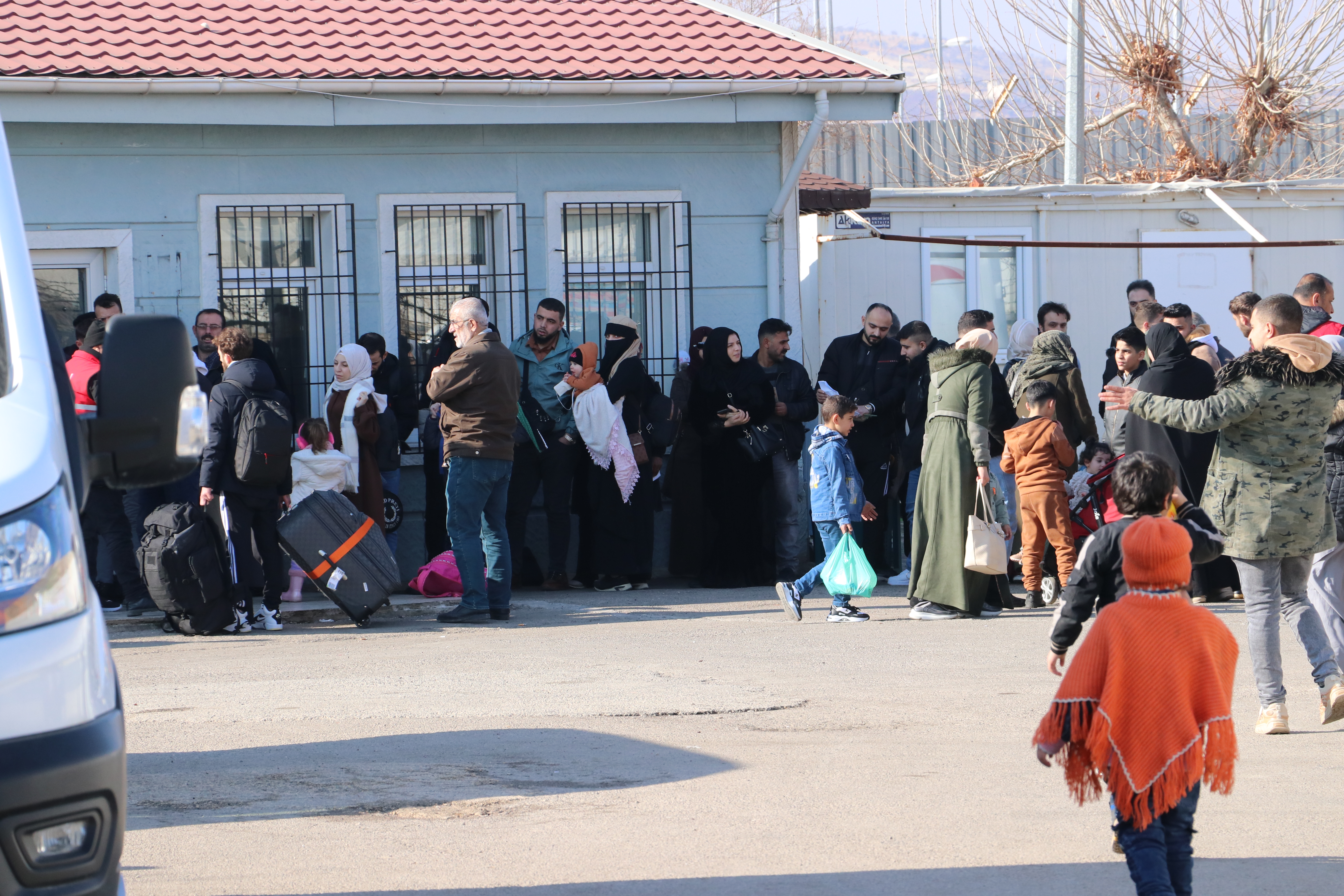
Some Syrians living in Gaziantep, who took refuge in Türkiye due to the civil war, close their utility subscriptions and prepare to return to their homeland following the fall of the Baath regime. İBRAHİM ÖZCAN / AA
Desire, Anxiety, and Uncertainty about Returning Home
According to the homecoming theory, the return of individuals who have lived abroad for an extended period is often a “conflicting experience.” This stems from the realization that the place they wish to return to is no longer the same as they remember, and that they themselves have also changed.27 This duality is particularly evident among Syrian students. The participants have been living in Türkiye for a long time and although they have experienced certain challenges in their educational journeys, they continued their studies within the Turkish education system up to high school. Therefore, those who wish to remain in Türkiye stated that they have “built a life here, for better or worse” (M9). Considering the meaning they attach to education, education is at the center of the life they have built. Moreover, they express a strong desire to acquire professional skills and improve their quality of life through education. Consequently, the primary motivation for these students to remain in Türkiye is the fear that their educational progress, achieved despite significant challenges, may be disrupted once more. Their principal concern regarding a potential return home is the uncertainty about the continuation of their education.
Students in Türkiye identified language acquisition as one of their primary challenges. Many expressed apprehension about returning to Syria, citing concerns that limited Arabic proficiency could impede their educational progress, especially since their proficiency in Turkish was stronger. For instance, a 12th-grade female student was reluctant to return due to the potential negative impact on her academic trajectory. As a result, she expressed her desire to remain in Türkiye and pursue a career as a nurse: “My father is currently considering [returning], but if I go, my education will be ruined because I don’t know Arabic. I want to stay here and become a nurse” (F8).
Another student expressed her desire to stay in Türkiye, highlighting her lack of proficiency in Arabic: “I want to stay here. Even if I return, I can’t read or write Arabic and would have to start over, which might disappoint me” (F12). This reflects the anxiety surrounding the uncertain post-war return process. Students commonly encounter challenges, including language barriers, adaptation to unfamiliar education systems, socioeconomic disadvantage, discrimination, and bullying. These factors contribute to what is often described as “integration fatigue.” Within the framework of homecoming, integration fatigue highlights the cumulative emotional and social costs of prolonged adaptation in the host society. Students’ hesitations toward return are shaped not only by post-war conditions in Syria but also by the prospect of undergoing a second cycle of adjustment. This positions homecoming as a layered and temporally extended process, in which past integration experiences directly inform future-oriented decisions.
Most students noted that since they had been in Türkiye from a young age, they had no experience of Syria’s education system. They expressed concerns about adapting to a completely new system if they returned. For example, one student stated, “I have no knowledge about education in Syria because I never studied there. So if I go back, I will be entering into something I don’t know” (M11), highlighting their lack of knowledge about the Syrian education system and their concern about entering an unfamiliar system. In contrast, a parent who compared the education system in Türkiye with that in Syria stated that they wanted to return to their country but were concerned that their children, having become accustomed to the system in Türkiye, would struggle with the system in Syria.
Within families, there are varying opinions about the decision to return to Syria. Some students expressed a desire to stay, but their families chose to return. A student currently in 12th grade expressed, “My family is considering returning. As for me, I’m indifferent about whether we go back or stay; I have no memories, experiences, or friends there. However, I am sad to think about being separated from my friends in Türkiye” (M23). This sentiment highlights that, although his family is inclined to return, he feels a lack of personal connection to Syria and is more affected by the potential loss of his friendships in Türkiye. Another student stated, “I want to study in Türkiye. My dad wants to go back, but my mom doesn’t” (F28), indicating a division in her family’s wishes; she and her mother prefer to remain in Türkiye while her father wishes to return. The findings indicate that female students and mothers experience increased anxiety concerning the prospect of return.In fact, girls are often considered a more vulnerable group when it comes to accessing and continuing their education. They face greater exposure to the negative impacts of educational interruptions that occur during the forced migration process. As a result, the possibility of undergoing another migration exacerbates anxiety and concern, particularly among female students and their mothers. For instance, one mother interviewed expressed her desire to stay in Türkiye, contrasting her husband’s wish to return, and noted that if they did return, the children would continue their education there. “Frankly, I want to stay here. I want them to continue their education here. But my husband's family is there, and he thinks differently. He is thinking of returning. Hopefully, they will continue there” (P2).
Students commonly encounter challenges, including language barriers, adaptation to unfamiliar education systems, socioeconomic disadvantage, discrimination, and bullying. These factors contribute to what is often described as “integration fatigue”
Some Syrian students expressed a desire to remain in Türkiye, while others indicated their longing to return to their home country. It was noted that many of these individuals are motivated to go back, continue their education, and contribute to the reconstruction of Syria. For instance, one student said, “I want to be an engineer; I want to help my country. I plan to return after graduating from university” (M12), highlighting both his ambition to become an engineer and his commitment to aiding his homeland. Another student acknowledged the uncertainty of the future, stating they wish to stay in Türkiye but simultaneously feel a strong desire to return to Syria to be with family and loved ones. This student captured their feelings with the following reflection: “Of course, I can’t predict the future, but I want to stay here too, but now I want to go back and meet my family there and be with them. I now have a country where I can go whenever I want and speak my language freely. I now have a country where I won’t be called a foreigner. But the downside is leaving my family here, leaving my friends and teachers. I’ve lived here for 12 years; I don’t know that place at all, I know it from photos, but when I go, this place will remain a memory, a souvenir, so I’m sad” (F3).
This statement highlights the difficulties and identity issues she faces in Türkiye, while also emphasizing that she has built a life here. Despite Syria being her home, she maintains only a minimal relationship with it. Furthermore, another student remarked, “This varies from person to person, but some may struggle to adapt. In Türkiye, they might be viewed as foreigners or non-Turks. Upon returning to Syria, they may still be seen as outsiders who have never experienced life there” (M32). This highlights his belief that one’s sense of identity and belonging is tied to having “lived there,” suggesting that a Syrian identified as a foreigner in Türkiye might still face the same perception in Syria if they have never been there before. Similarly, another male student expressed, “I don’t feel like I belong there, and I’m not prepared for the culture and people in Syria. I can adjust to the education system in Türkiye, but I have no idea how things operate in Syria” (M21). This suggests a lack of belonging to Syrian society and demonstrates that, although adaptation to the Turkish system has occurred, there remains unfamiliarity with Syrian realities. As a result, for some students, the prospect of returning to Syria represents a sense of alienation and uncertainty rather than a return home.
For immigrant students, choosing a profession serves both as a tool to address current economic insecurity and as a route to future self-sufficiency. The most commonly mentioned career goals among participants are engineering, medicine, teaching, psychology, and law
Some students expressed that they do not see their future in Türkiye or Syria and wish to continue their education abroad. A common reason for this is the uncertainty in Türkiye’s university placement system. While Syrian students have been integrated into the Turkish education system, they must take the Foreign Student Exam (YÖS), unlike local students who can enroll in universities without paying tuition. This situation exacerbates the financial challenges faced by socioeconomically disadvantaged Syrian students, leading them to seek opportunities abroad. One student highlighted the high university fees in Türkiye and the exam system's uncertainty, expressing a desire to study abroad. “I don’t want to study here. I want to study abroad. Tuition fees at Turkish universities are high, and scholarships are not available. We want to take the YÖS exam. They said you have to be a citizen to take the YKS exam, but now we don’t know whether we will take the YKS or the YÖS. So I don’t know what to study for” (F24).
Some students conveyed their aspirations to study abroad, highlighting specific careers they wish to pursue in the future. For instance, one male student mentioned, “I want to live in Canada. I can train myself in cybersecurity there” (M14), underscoring his intention to study cybersecurity and settle in Canada.
These findings align with homecoming theory’s conceptualization of the disjuncture between remembered home and lived reality after prolonged displacement.28 For students socialized within the Turkish education system, return is not perceived as a restoration of familiarity. Instead, it is characterized by the risk of renewed disruption, linguistic alienation, and social repositioning. Thus, educational structures shape the spatial negotiation of belonging and non-belonging, framing homecoming as an uncertain and emotionally ambivalent experience rather than a straightforward return.
Future Expectations: Between Hope and Anxiety
Forced migration results from extraordinary circumstances such as war, internal conflict, or natural disasters. It leaves individuals uncertain about their current living conditions and their future. In this context, forced migration produces a dual socio-political reality. Hopes and expectations are disrupted, leaving people suspended between hope and anxiety, and between planning and postponement.29 This research found that nearly all Syrian students articulated clear, concrete, and ambitious future goals. When discussing their aspirations, the majority prioritized pursuing higher education, followed by the ambition to pursue fulfilling professions. For example, one male student expressed, “I want to have a profession in the future and also reach a bright place in my future life. I want to be a dentist,” highlighting his aspiration to become a dentist and achieve a “bright” future. Similarly, a female student shared her educational and professional ambitions, stating her desire to become a doctor to serve others, and emphasized that an educated mother is better equipped to support her child. “If we think about it as a profession, I want to be a cardiovascular surgeon. Because I want to touch people's lives, be of benefit to them, and be remembered fondly by people. Let's say I get married in the future and have children; it is very important to contribute something to those children. I think an uneducated mother cannot contribute much to her children” (F22).
Another male student stated, “Since we don’t know what the future holds, we want to study and get a job. I want to be my own boss” (M8), indicating his desire to get an education and a profession in the face of an uncertain future.
Research shows that, for immigrant students, choosing a profession serves both as a tool to address current economic insecurity and as a route to future self-sufficiency. The most commonly mentioned career goals among participants are engineering, medicine, teaching, psychology, and law. These aspirations reveal a drive for personal advancement and financial security, as well as clear expectations for the future and a wish for social inclusion, belonging, and respect. Moreover, comments from other students in the study, such as “earning my own money,” “not being a burden on my family,” and “I want to start my own business,” show that this motivation is both individual and tightly linked to family obligations.
Interviews with parents also support the students’ views. Parents stated they wanted their children to have a good profession in the future. For example, one parent stated, “I want to see her as a doctor in the hospital in the future. We want to stay in Türkiye” (P7), expressing their desire for their daughter to become a doctor and to stay in Türkiye. Similarly, another student’s parent emphasized that they want their daughter to study here and have a career, saying, “I want her to continue here. She wants to study medicine or pharmacy. Hopefully, it will happen” (P9). Another parent stated that they do not want to return to Syria yet, that they will stay in Türkiye, and that their daughter wants to be an agricultural engineer, saying, “My daughter wants to be an agricultural engineer. She took the YÖS exam. Hopefully, she will pass. We will stay here; we are not thinking of returning for now” (P1). Therefore, it is understood that the mission of “saving the future” that the students attach to education is also conveyed to their children by their parents.
Qualitative data indicate that migrant students possess a strong future orientation and high levels of motivation. Even in circumstances marked by uncertainty, these students demonstrate a remarkable ability to maintain their hopes and a steadfast desire to establish a new life through education. They perceive education as a safety net amid the challenges posed by forced migration and the unpredictability of the future. In essence, these students frame their uncertain futures within the context of education and the opportunities it presents. However, the anxiety stemming from the return process often replaces their hope for the future. These future-oriented aspirations demonstrate that homecoming is imagined less as an immediate decision than as a postponed and conditional project. Within this framework, education enables students to maintain hope while navigating uncertainty and to envision forms of belonging that transcend fixed national or territorial boundaries. Thus, education mediates the temporal dimension of homecoming by connecting present challenges with imagined futures.
These findings show that future expectations among Syrian refugee students are shaped by the interplay of hope and anxiety. This tension is inherent in post-conflict homecoming processes. Education allows students to articulate specific aspirations and professional goals. However, their futures remain contingent and postponed due to ongoing uncertainties regarding return. Consistent with Stefansson’s argument, return is a future-oriented process of re-rooting rather than a single event. Education serves as a temporal anchor, sustaining hope and strategically deferring homecoming instead of providing resolution.30
Conclusion and Discussion
This study examined how education shapes the imaginaries of return to Syria, for Syrian high school students’ and parents’ residing in Türkiye, conceptualizing return not as a final act of relocation but as an ongoing process of homecoming. Drawing on qualitative interviews with Syrian high school students and a smaller number of parents in Türkiye, the findings demonstrate that education plays a central role in how return is imagined, postponed, or conditionally negotiated in a post-conflict context, echoing previous work that conceptualizes return as a socially and temporally mediated process rather than a discrete event.31
For female students, education is a protective factor against early marriage and dependency
The analysis shows that education functions as a future-oriented anchor through which students negotiate security, dignity, and belonging. Rather than expressing a straightforward desire either to return or to remain, students frame both possibilities in relation to the continuity or disruption of their educational trajectories. Within the homecoming framework, this suggests that return is not primarily driven by nostalgia for a pre-war past, but by forward-looking considerations concerning safety, professional aspirations, and the possibility of building a livable future.32
At the same time, the findings reveal that homecoming is marked by ambivalence, characterized by a coexistence of hope, anxiety, and uncertainty. For students who have spent most of their formative years in Türkiye, return is often associated with the risk of renewed displacement, educational interruption, and social exclusion. Education thus emerges as a stabilizing reference point that mediates these uncertainties, shaping how belonging and non-belonging are experienced across national contexts.33 The notion of integration fatigue further illustrates how prolonged adaptation in the host society can influence future-oriented decisions, without necessarily translating into a clear willingness to return.
The study further underscores the generational and gendered aspects of homecoming. Parents often assess the prospect of return based on memories from the pre-war period. In contrast, students’ perspectives are shaped by their current educational experiences and future aspirations. For female students, education is a protective factor against early marriage and dependency. The likelihood of their return depends in particular on educational continuity, a trend often documented in forced migration contexts.34
By applying the homecoming framework to the educational experiences of Syrian refugee youth in Türkiye, this study contributes to the literature on forced migration and return in three key ways. First, it foregrounds education as a mediating institution that connects past displacement with imagined futures. Second, it centers the voices of refugee students, highlighting the generational reconfiguration of belonging in contexts of protracted displacement. Third, it demonstrates that return decisions are best understood as conditional, temporal, and relational processes rather than as binary choices.
Endnotes
* This study’s findings are based on the doctoral thesis titled “Academic Resilience of Migrant Children in Türkiye,” completed by Müberra Nur Emin under the supervision of Prof. Dr. Zafer Çelik at the Department of Sociology, Ankara Yıldırım Beyazıt University.
- In the article, the term “refugee” used for Syrians in Türkiye is not a legal definition, but rather a sociological concept used in the context of their forced migration to Türkiye.
- “Flash Regional Survey on Syrian Refugees’ Perceptions and Intentions on Return to Syria,” UNHCR, (February 6, 2025), retrieved from https://data.unhcr.org/en/documents/details/114221.
- This data was obtained from an interview with a representative of the Ministry of National Education.
- “Geçici Koruma,” T.C. İçişleri Bakanlığı Göç İdaresi Başkanlığı, (October 31, 2025), retrieved from https://www.goc.gov.tr/gecici-koruma5638.
- “Flash Regional Survey on Syrian Refugees’ Perceptions and Intentions on Return to Syria.”
- Jessica Belt, “The State of Education in Syria,” SARD, (September 1, 2025), retrieved from https://www.sardngo.org/blog/the-state-of-education-in-syria.
- Russell King and Katie Kuschminder, “Introduction: Definitions, Typologies and Theories of Return Migration,” in Russell King and Katie Kuschminder (eds.), Handbook of Return Migration, (Cheltenham, UK: Edward Elgar Publishing, 2022), pp. 1-17; Jean-Pierre Cassarino, “Theorizing Return Migration: The Conceptual Approach to Return Migrants Revisited,” International Journal on Multicultural Societies, Vol. 6, No. 2 (2004), pp. 253-279.
- Michael P. Todaro, “A Model of Labor Migration and Urban Unemployment in Less Developed Countries,” The American Economic Review, Vol. 59, No. 1 (1969), pp. 138-148; Oded Stark, The Migration of Labor, (Cambridge, MA: Basil Blackwell, 1991).
- Richard Black and Saskia Gent, “Sustainable Return in Post-Conflict Contexts,” International Migration, Vol. 44, No. 1 (2006), pp. 15-38.
- Anders Stefansson, “Homecoming to the Future,” in Fran Markowitz and Anders H. Stefansson (eds.), Homecomings: Unsettling Paths of Return, (Lanham, MD: Lexington Books, 2004), pp. 2-20.
- Lauren Hammond, “Tigrayan Returnees’ Notions of Home: Five Variations on a Theme,” in Fran Markowitz and Anders H. Stefansson (eds.), Homecomings: Unsettling Paths of Return, (Lanham, MD: Lexington Books, 2004), pp. 36-52.
- Zozie O. De Sas Kropiwnicki, “The Meeting of Myths and Realities: The ‘Homecoming’ of Second-Generation Exiles in Post-Apartheid South Africa,” Refuge: Canada’s Journal on Refugees, Vol. 30, No. 2 (2014), pp. 79-92.
- Stefansson, “Homecoming to the Future,” pp. 2-20.
- Sarah Dryden-Peterson, Refugee Education: A Global Review, (Geneva: UN High Commissioner for Refugees, 2011), retrieved from https://www.refworld.org/policy/strategy/unhcr/2011/en/91053.
- Sarah Dryden-Peterson, “Refugee Education: The Crossroads of Globalization,” Educational Researcher, Vol. 45, No. 9 (2016)), pp. 473-482.
- De Sas Kropiwnicki, “The Meeting of Myths and Realities,” pp. 79-92.
- The Hidden Crisis: Armed Conflict and Education, (Paris: United Nations Educational, Scientific and Cultural Organization, 2011).
- Sharan B. Merriam and Elizabeth J. Tisdell, Qualitative Research: A Guide to Design and Implementation, 4ᵗʰ ed., (San Francisco, CA: Jossey-Bass, 2016).
- Merriam and Tisdell, Qualitative Research.
- John W. Creswell, Qualitative Inquiry and Research Design: Choosing among Five Approaches, (Thousand Oaks, CA: Sage Publications, 2007).
- Ahmet Yıldırım and Hasan Şimşek, Sosyal Bilimlerde Nitel Araştırma Yöntemleri, 6ᵗʰ ed., (Ankara: Seçkin Yayıncılık, 2008).
- Virginia Braun and Victoria Clarke, “Using Thematic Analysis in Psychology,” Qualitative Research in Psychology, Vol. 3, No. 2 (2006), pp. 77-101.
- Braun and Clarke, “Using Thematic Analysis in Psychology.”
- Ethical approval for this study was obtained from the Ethics Committee of Ankara Yıldırım Beyazıt University (April 17, 2025).
- Stefansson, “Homecoming to the Future.”
- De Sas Kropiwnicki, “The Meeting of Myths and Realities.”
- Stefansson, “Homecoming to the Future.”
- De Sas Kropiwnicki, “The Meeting of Myths and Realities.”
- Cathrine Brun, “Active Waiting and Changing Hopes: Toward a Time Perspective on Protracted Displacement,” Social Analysis, Vol. 59, No. 1 (2015).
- Stefansson, “Homecoming to the Future.”
- Stefansson, “Homecoming to the Future;” Cassarino, “Theorizing Return Migration.”
- De Sas Kropiwnicki, “The Meeting of Myths and Realities;” Dryden-Peterson, “Refugee Education.”
- Dryden-Peterson, Refugee Education.
- The Hidden Crisis.
