

Introduction
Technological advancements are undoubtedly the most significant factor compelling a transformation in the nature of military engagements. These advancements have introduced weapons and tools previously unseen on the battlefield, enabled more precise planning and strategic coordination, and altered the scale of inflicted and sustained damage in line with military capacity. Contemporary military confrontations must therefore also be interpreted as a race for technological superiority. While technology is not necessarily a direct determinant of the outcome of wars, it is clearly a factor that warrants serious consideration.
Among the many technological tools and weapons emerging on the battlefield, it is particularly important to highlight unmanned systems as the most striking developments of the current era. The presence of unmanned vehicles operating on land, in the air, and at sea has introduced new dimensions to military engagements. The absence of direct human involvement in combat, when compared to conventional warfare, can even be considered revolutionary. In particular, the deployment of unmanned aerial vehicles (UAVs) has necessitated a fundamental reassessment of offensive, defensive, and surveillance strategies. UAVs, available in various capacities and capabilities and categorized as either armed or unarmed, have become a cornerstone of the modern defense industry. As autonomous weapon systems are increasingly incorporated into military arsenals, the presence of drones in the skies has grown markedly.
Drones, which constitute the primary focus of this study, are currently employed for a wide range of both military and non-military purposes. Their applications include monitoring forested areas for fire risks, search and rescue operations, amateur photography, weather measurement, border surveillance, logistics, detection of illegal hunting and other unlawful activities, delivery of healthcare services, entertainment, and agricultural practices.1 This study, however, focuses on the military and security-related uses of drones, with particular emphasis on the category of lethal drones, commonly referred to as “killer drones.”
Drones exert both physical and psychological pressure on adversaries by introducing the threat of violence into spaces far removed from conventional battlefields. Notably, this pressure extends not only to combatants but also to civilian populations.2 UAVs were first employed for military purposes during the Vietnam War, the Iran-Iraq War, the 1982 Lebanon War, and the Persian Gulf War.3 Armed drones have been present on the battlefield since the 1990s, with the Balkans, Afghanistan, and Iraq serving as the earliest examples of their integration into active combat operations. Since then, armed drones have continued to occupy the skies in various parts of the world.4 Following technological advancements in the 2000s, drones began to be used extensively for intelligence, surveillance, and reconnaissance (ISR) operations, making their impact on the battlefield increasingly visible. The unique tactical advantages they offer compared to traditional military platforms have contributed to the growing presence of drones in security-related missions. As the effectiveness of autonomous operations became more apparent, investment in drone technologies significantly increased, reshaping their trajectory.5 By the 2010s, the military utility of drones had become so pronounced that they came to be seen as representing the new face of warfare. Terms such as “the drone age” and “drone wars” entered common usage.6 Especially in the post-9/11 era, drones have become central to counterterrorism strategies, primarily in precision targeting and surveillance operations against specific individuals or groups.7 While drones may have a strong deterrent effect on terrorist actors, it is also important to acknowledge that the killing of civilians or high-ranking members during drone strikes can provoke vengeance-driven responses, thereby potentially escalating violence.8
Especially in the post-9/11 era, drones have become central to counterterrorism strategies, primarily in precision targeting and surveillance operations against specific individuals or groups
The developments following 9/11 have shown that drones are not used solely for surveillance purposes but have also become a structural component of war strategies. Drones effectively integrated with artificial intelligence (AI) have not only increased operational efficiency but have also contributed to a transformation in the nature of warfare. In this context, it can be said that killer drones supported by AI algorithms represent a significant transformation not only in terms of military capacity but also in terms of strategic balance, psychological impact, and the future of warfare. Today, many countries –primarily the U.S., China, Russia, Israel, and Türkiye– have placed AI-supported unmanned systems at the core of their military strategies. It would be inaccurate to evaluate these technologies solely within the context of counterterrorism, as they are increasingly integrated into conventional warfare doctrines as well.
In fully autonomous systems, human intervention is nearly impossible, as these systems select their targets and execute attacks based solely on the initial directives they receive
The concept of swarming drones is also analyzed in this study. These drones are referred to as group drones in the form of mini drones that mimic flying animals in nature, and they exhibit collective behavior by moving together. Although they act in such a coordinated manner, there are challenges related to real-time coordination among them. Killer drones are defined as drones that directly focus on a target. For these to be effective, perfect coordination is essential. The contribution of AI can enhance their coordination and accuracy in hitting targets, as AI-driven coordination can extend flight time, reduce risks, expose enemy vulnerabilities, and enable more serious attacks. Therefore, the study argues that the use of AI in swarming and killer drones can significantly increase the organization, speed, and striking power of attacks. It also suggests that in the future, alongside large-scale drones, AI-supported mini-drones will be more commonly seen on the battlefield. This is mainly due to the use of small drones in the Russia-Ukraine war, both because they are more cost-effective and because they have greater potential for effective attacks.
The main research question of this article is to explore and analyze how AI-controlled killer drones are transforming the nature of warfare, and how this transformation can be assessed in the context of swarm and killer drone technologies, particularly within the framework of the Russia-Ukraine war. The study seeks to address the potential multifaceted effects of AI-supported killer drones in warfare. In this context, one of the main objectives is to examine the psychological and physical advantages that AI-controlled UAVs may provide, in comparison to those operated by human controllers. Additionally, the study aims to discuss the tactical and strategic outcomes resulting from the integration of AI technologies into UAVs and to focus on the emerging paradigms of warfare that arise as a result. By examining how these systems have been utilized in the Russia-Ukraine war, the study also aims to make future-oriented projections based on current examples. In this regard, the study will comprehensively address how AI-controlled killer drones are shaping the character of war.
The Role of AI in Warfare
Although the cyber domain has emerged as a new frontier, another topic that has recently gained increased attention from the international community is AI. While research on AI began in the 1950s, the growing investments in this field and the opportunity to integrate AI into weapon technologies have made this trend more significant. From this perspective, the emergence of AI has marked the beginning of a new era in military operations, transforming the processes, strategies, planning, and execution of warfare. The effective integration of AI into the military sector has not only enhanced operational capabilities but has also raised various ethical concerns. However, this study will not delve into these issues in detail.
Algorithms enable the faster prediction of enemy movements while also providing real-time actionable intelligence, which naturally positively impacts strategic decision-making processes
Autonomous weapon systems have been partially used in military technology since World War II, they have profoundly impacted the nature of war.9 Autonomous weapon systems can generally be defined as weapon systems that execute given directives through algorithms, focusing on targets and carrying out attacks without human intervention.10 A key distinction to consider is between fully autonomous and semi-autonomous weapon systems. In fully autonomous systems, human intervention is nearly impossible, as these systems select their targets and execute attacks based solely on the initial directives they receive.11 In contrast, semi-autonomous weapon systems can be defined as systems where human operators select targets and the system itself executes the attack, or in other words, where humans are involved in the attack cycle and have the ability to stop the attack at any point.12
Considering this information, AI-powered systems have begun to partially replace humans who have traditionally played an active role in warfare. Thanks to their problem-solving and decision-making capabilities, these systems have significantly influenced the course of warfare and have also facilitated military operations on the battlefield. Additionally, a fundamental point to emphasize is that autonomous weapons lack human emotions and do not require rest, food, water, or other resources. This allows them to operate continuously for extended periods without interruption.13
Autonomous systems are widely used today in both armed and UAVs, autonomous drones, land and naval vehicles, and other defense industry products. States have significantly reduced the need for human involvement by utilizing AI-powered autonomous weapon systems, particularly for border surveillance, detecting potential terrorist threats, and carrying out precision strikes with drones.14 In this context, autonomous systems have become one of the most important components of the defense industry today.15
Investment in autonomous weapons is steadily increasing today because the algorithms they possess enable them to move and react more quickly.16 The military Observe, Orient, Decide, and Act (OODA) loop, developed by John Boyd, highlights how autonomous weapons can provide significant advantages to states on the battlefield.17 The key aspect here is effectively integrating and implementing this loop into military systems.18 The advanced algorithms of autonomous weapons allow them to operate continuously and efficiently, eliminating the fatigue factor associated with soldiers. The absence of fatigue also means that these systems can carry out defensive or offensive operations without emotional influence. By creating a stress-free environment, autonomous weapons can make more consistent decisions and perform more reliably in combat scenarios.19
While these factors highlight the physical advantages of autonomous weapons, perhaps the most crucial benefit is the reduced role of human personnel on the battlefield, thereby minimizing the risk to human life.20 In counterterrorism operations, states can use autonomous weapons to locate and neutralize threats hidden in narrow and dangerous hideouts where terrorist group members may be concealed. This significantly reduces the risk of soldiers being harmed or facing life-threatening situations during such missions.
While drones have already removed soldiers from the battlefield, autonomous systems are now eliminating even operators from direct engagement, excluding all human presence aside from the intended targets
The integration of AI-supported autonomous weapons into military operations has fundamentally transformed, or rather improved, battlefield efficiency, precision, strategy, and decision-making processes. AI systems have also provided states with ease in intelligence, surveillance, and reconnaissance activities. AI systems, especially by processing images, communications, and, more importantly, social media data, can provide more accurate information in a shorter time.21 In this context, algorithms enable the faster prediction of enemy movements while also providing real-time actionable intelligence, which naturally positively impacts strategic decision-making processes.
Another critical battlefield where AI is used is the cyber domain.22 Today, cyberattacks by both state and non-state actors are becoming increasingly sophisticated and dangerous. AI algorithms have been developed to detect, analyze, and respond to these threats in real time.23 These AI-powered cybersecurity tools have started playing a significant role in combating cyberattacks, allowing states to gain advantages both in defense and offense.24 AI’s role is not limited to the cyber domain; it also extends to training and simulation. AI-supported virtual reality (VR) and augmented reality (AR) systems provide soldiers with the opportunity to train outside of physical environments, preparing them for real combat conditions through simulations.25
AI is increasingly providing states with operational efficiency in warfare, enabling complex and time-consuming tasks to be completed more quickly. This naturally reduces human error and accelerates decision-making processes.26 The shortening of decision-making processes also enables more efficient logistical operations and better preparation for military campaigns. Targeting systems supported by AI algorithms help identify and neutralize enemy targets accurately by analyzing data from sensors. Advanced precision and accuracy could allow AI to differentiate between combatants and civilians more effectively than humans.27 While this is thought to lead to fewer civilian casualties and more successful operations, this has not been the case in today’s AI-assisted attacks.
The potential for such group drones to carry chemical, biological, radiological, and nuclear agents or bombs opens the door to attack methods utilizing weapons of mass destruction
In short, developments in technology over the past decades have enabled states to develop more effective military strategies. The presence of autonomous weapons systems, and their cheaper nature compared to nuclear weapons used for deterrence during the Cold War, allows states to increasingly deploy autonomous weapons, drones, or AI-powered systems in military operations. Whether for offense, defense, or intelligence, the use of these drones or autonomous systems enhances states’ deterrence and shortens decision-making processes.
Killer Drones and AI-Enabled Systems
Although the conceptualization and early development projects of armed drone technologies date back to the world wars –and more intensively to the Cold War period– their actual deployment on the battlefield took longer. The motivations behind the push to develop drones have included their ability to carry out missions under any conditions, the elimination of risks and errors associated with human pilots, the capacity to conduct sustained and cost-effective strikes on targets, and the psychological impact of their perceived inevitability, which contributes to moral degradation. Furthermore, drones offer the advantage of executing high-risk operations in dangerous areas without endangering human lives.28 Undoubtedly, several factors explain the increasing presence of lethal drones in contemporary conflict zones. They do not require high-budget or resource-intensive military programs and allow coercion to be exercised with reduced national and international costs. Likewise, they can be adapted to various conditions and scenarios, minimize human casualties for the deploying side, and can be more easily returned to the battlefield after technical setbacks compared to traditional weapon systems.29
While drones have become an integral part of conventional military programs such as state surveillance, military mapping, and special operations targeting, they have also given rise to a new dimension of warfare called “lethal surveillance.”30 Particularly due to their ability to conduct covert cross-border operations and carry out sudden strikes, drones have significantly altered the dynamics of conflict. Their detection, tracking, and neutralization are considerably more difficult than with conventional aerial platforms, contributing to this distinctiveness.31 In this context, it is especially important to emphasize that drones have become one of the key instruments for achieving air superiority.
While large drones continue to offer substantial capabilities and will undoubtedly remain a fixture in future battlefields, the potential disruptive impact of AI-controlled drone swarms should not be underestimated
It is also important to recognize that the use of drones –particularly in delivering sudden, undetected strikes from the sky against individuals far removed from active battlefields– functions as a tool of fear-based strategy and psychological warfare. Powerful states can wield such technologies to project fear onto opposing societies without resorting to conventional military assaults.32 As a state increases both the quantity and sophistication of its drone arsenal, the sustained psychological pressure it can exert on its adversaries intensifies accordingly. When the opposing side becomes convinced that this threat will be operationalized, it may find itself facing a profound security dilemma.33 In this way, drones have become a transformative factor in redefining the concepts of sovereignty and territoriality, shifting the nature of military engagements to a new dimension.34 Notably, the deployment of autonomous drones, especially as components of lethal autonomous weapon systems, appears to provide significant tactical advantages in target identification and precision strikes, despite the ongoing ethical debates surrounding their use.35
Over the years, killer drones have become synonymous with the idea of death descending from the sky, a reputation reinforced by their technological evolution. Their ability to carry and deploy weapons and explosives against strategic targets has fostered a widespread perception of their inevitability and invincibility. As a result of intensive development programs, these systems –often unmanned and increasingly autonomous– have emerged in various shapes and sizes, becoming more visible in military arsenals. They are deployed not only against state actors but also against non-state entities. The incorporation of such sophisticated systems into conflict scenarios provides decisive advantages over adversaries lacking comparable technological capabilities.36 While drones have already removed soldiers from the battlefield, autonomous systems are now eliminating even operators from direct engagement, excluding all human presence aside from the intended targets. The existence of machines that can conduct combat autonomously underscores the notion of “costless war.”37 Particularly in tracking and neutralizing both high-ranking and rank-and-file members of terrorist organizations, drones have proven to be highly effective tools, rendering such groups increasingly inoperative. Consequently, drones have disrupted the command, communication, and leadership succession processes within these organizations, solidifying their status as a significant threat.38
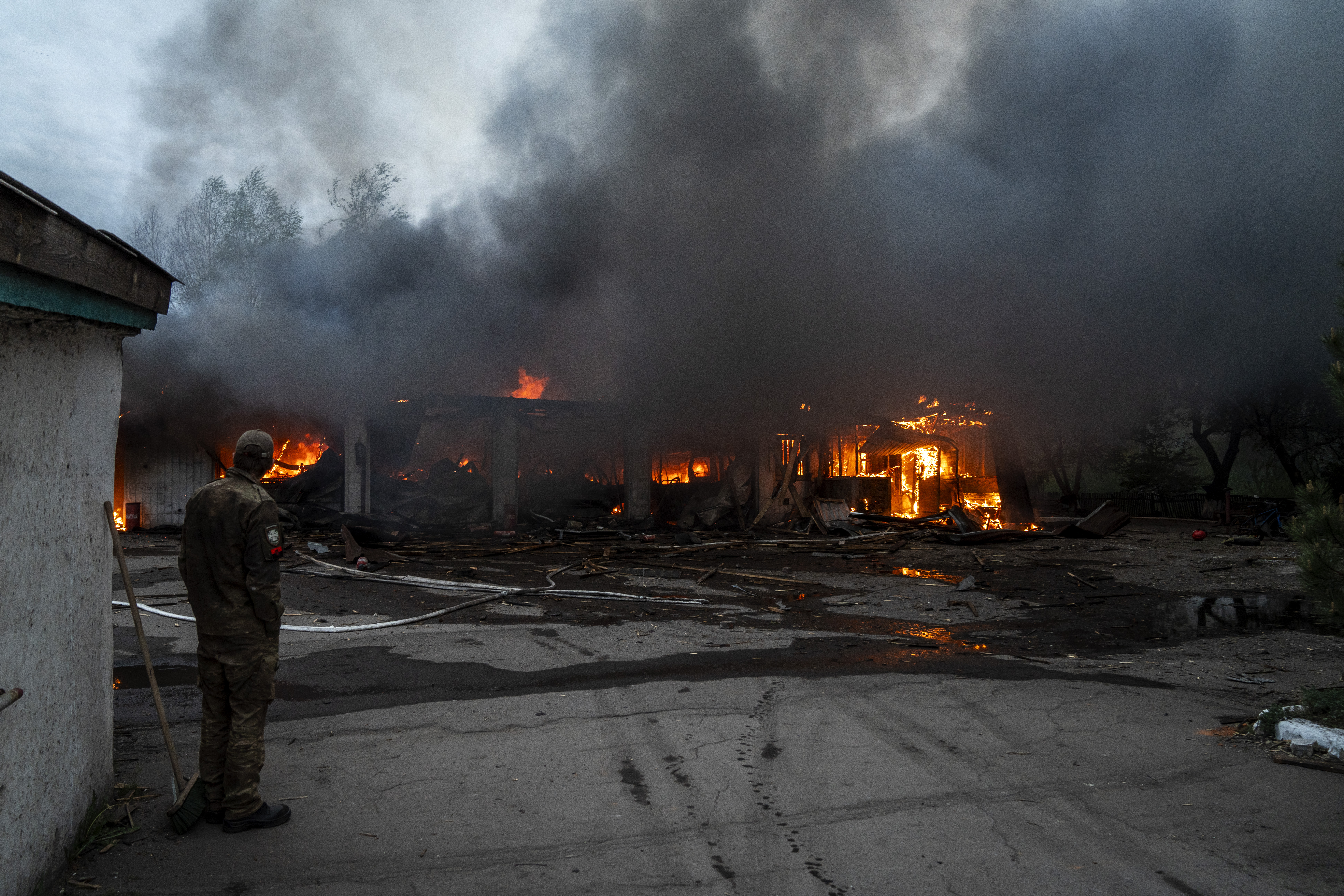 In April 2025, Ukraine reported that the Russian army launched a drone attack on the city of Dobropillya in Donetsk Oblast, with Ukrainian fire crews responding to the fires caused by the strike. JOSE COLON / AA
Traditionally, drones have been operated by a human controller. The quality of the drone itself is critical, but the skills and weaknesses of the operator are equally important. However, with the advent of autonomous vehicles, the human element has been removed from direct control, leading to more qualified forms of anticipation, attribution, and attack.39 The ability to destroy a target without direct engagement or to cause collateral damage in case of errors has provided a sense of relief for drone operators. For instance, debates have arisen regarding whether the operator of a drone sent to a battlefield should possess combat experience or whether a civilian could be selected for the task. While civilian involvement presents specific risks, the absence of soldiers during operations has raised concerns about the potential for classifying such actions as civil crimes.40 Additionally, operators carrying out these missions may experience various mental health issues due to the losses they inflict, form emotional connections with the targets they have observed for long periods, or even identify with the drones they operate, leading to a shift in perspective.41 While the personal characteristics of drone operators, including their ability to comprehend orders, their skills, and foresight, play a significant role in determining the success of operations, the implementation of autonomous systems has been a development aimed at eliminating this human factor.
According to Boyle, automated drones offer four key advantages over those manually piloted throughout their missions. First, they reduce the need for continuous human control, thus lowering labor costs and minimizing pilot fatigue. Second, increased automation, especially during takeoff and landing, could reduce crash rates, which are typically highest during these phases. Third, automation may help avoid human overreactions to weather or environmental changes. Fourth, automated systems can react more quickly than humans to threats such as incoming missiles, potentially saving the drone. Given these advantages, it is likely that both commercial and military drones will continue to adopt greater levels of automation, much like manned aircraft have over time.42 It is obvious that the integration of AI to support the use of autonomous systems by military forces will open new horizons.
When one considers the hypothetical scenario in which all drones could have been controlled by a single AI system instead of 117 human operators, the potential impact of future killer drone attacks becomes a critical subject of concern
According to Horowitz, the primary advantage of autonomous systems powered by machine learning lies in their enhanced speed of decision-making and reaction. Compared to remotely piloted or manned systems, AI-enabled platforms can execute tasks more rapidly and efficiently. For example, an autonomous aircraft might be better equipped to detect and avoid air defense threats or outmaneuver adversaries in aerial combat, increasing its likelihood of mission success. Furthermore, autonomous systems can follow programmed instructions with greater accuracy, minimizing errors caused by human fatigue, confusion, or cognitive limitations in battlefield conditions. For instance, an autonomous sniper would not face the exhaustion or hesitation that a human might experience during prolonged waiting periods.43
AI includes a variety of technologies with significant potential for military use, enhancing mission efficiency and minimizing risks to personnel. As a force multiplier, AI improves combat effectiveness, streamlines support functions, bolsters cybersecurity, and extends military capabilities. As warfare progresses, commanders are expected to rely more on AI for tracking enemy movements, analyzing large data sets, and executing quick countermeasures. In military operations, AI speeds up decision-making, enhances targeting accuracy, strengthens deception and information tactics, leverages big data, advances intelligence and surveillance, and aids operations in challenging environments like anti-access/area denial zones.44
For instance, the shift from pilot control to AI management was not instantaneous. Initially, the role of machines in control was gradually increased, with flight controls and target options becoming automated. Pilots shifted from physically controlling aircraft to managing onboard systems. While computers and electronic systems gathered information more rapidly and efficiently, pilots maintained overall dominance of the system. At this stage, decision-making could be understood as a balanced authority between humans and machines.45 However, relying on AI for decision-making may risk diminishing the role of human intuition and judgment in critical situations. In high-stakes scenarios, the experience, flexibility, and instinct of commanders remain crucial for managing unexpected outcomes, internal obstacles, and strategic surprises. Balancing speed and timing is complex, as operational success often depends on how quickly troops, equipment, or munitions can be mobilized and deployed.46 AI-controlled drones are more effective in staying active (in flight), target designation, executing sudden attacks, and conducting risk assessments. This results in a higher likelihood of a more reliable strike.47 Autonomous drones, with these capabilities, complicate the battlefield by identifying targets that are difficult to reach with traditional attacks, executing surprise strikes, and neutralizing known defense systems.48
The use of AI in drones has become a subject of debate as drones have proven their worth on the battlefield and the benefits of integrating AI technologies into defense industries have become apparent. The speed and accuracy potential, which are unmatched by human-controlled drones, are among the key reasons for this shift. Although the possibility of using drones in lethal strikes raises ethical concerns, the existing applications of unmanned targeting and killing, coupled with AI’s ability to perform these tasks at a lower cost and with a higher success rate, have made it an encouraging factor in this development.49 AI is progressively integrated into UAV operations, with each successful use further driving its adoption. Military aviation is increasingly leveraging AI to enhance speed, precision, and safety while reducing resource consumption. As most AI technologies are dual use, distinguishing between civilian and military applications becomes challenging. As AI evolves, it is transforming warfare into “hyper war,” where combat occurs so quickly and autonomously that human decision-making is almost entirely excluded from the OODA loop.50
As military conflict continues to revolve around the offense-defense nexus, AI integration will not only enhance offensive capabilities but also be incorporated into defensive systems
It can be argued that AI-fused and augmented autonomous weapon systems will bring about significant changes in future conflicts in terms of increased range, accuracy, coordination, intelligence, and speed. The introduction of such technological innovations into the battlefield undoubtedly raises concerns about instability in security and uncertainty in defense, which must be addressed.51 The operational and tactical contributions of autonomous systems in terms of speed, range, and precision to the battlefield are already evident and will continue to be so. It should be noted that the contribution of autonomous systems is steadily increasing in the areas of control, first-strike capability, cost, and legal limitations, and that these systems will continue to keep the human element further removed from the battlefield.52
Recent advances in AI and robotics have enabled drones to operate in coordinated swarms. Inspired by animals such as insects, birds, and pack animals that collaborate through direct or subtle communication, these small drones –some as small as birds or insects– can now fly in formation and conduct synchronized attacks on enemy targets.53 Johnson also draws attention to AI-controlled swarming drones. The presence of dozens of drones in the sky, supported by AI technologies, has created a significant impact on the course of conflicts, both in terms of defense and in launching attacks on sensitive sites such as nuclear facilities. Advancements in sensor, communication, and processing technologies, aided by big data analytics and machine learning, have made it increasingly feasible to detect and neutralize targets. As a result, swarming drones can now carry out tactical, seemingly unavoidable attacks on a variety of targets, from ground radar stations to submarines.54 The potential for such group drones to carry chemical, biological, radiological, and nuclear agents or bombs opens the door to attack methods utilizing weapons of mass destruction. Although such an attack has not yet occurred, the fear of the potential impact that state or non-state actors could create with simple killer drones carrying such agents generates significant public concern.55 At this point, it is possible to harness AI to manage the coordination of group drones, organize multi-faceted attacks on targets, and quickly identify any cyber-attack risks. The detection and prevention of AI-supported swarming drone attacks pose a considerable challenge in terms of target security.56
One of the key points to emphasize when concluding the discussion is the legal and ethical debates surrounding the use of drones in operations and targeted killings. Like other issues along the technology-security line, drone attacks are highly controversial in this regard. The potential for targeted assassinations using drones, both domestically and internationally, raises concerns about the lack of legal justification, the possibility of mistaken targets, the risk of subjective accusations, and the potential harm to third parties.57 In cases where the country in which the operation is conducted does not grant permission or is unwilling, it is essential to note that drones can lead to violations of sovereignty and may escalate into an international crisis.58 The topic of drones and targeted killings will undoubtedly continue to be debated within the framework of international law. This is particularly true regarding attacks on non-state actors under the guise of self-defense, which fuels ongoing discussions. While drones are highly suitable for preventive and pre-emptive strikes, the legal framework will always be a catalyst for these debates.59 Since human-planned targeted killings involve such concerns, the legal and ethical framework that AI must consider in its operations will likely open the door to new criticisms.
It is necessary to highlight that the use of killer drones in target identification and the determination of combatants, non-combatants, allies, enemies, and important versus non-important targets raises ethical issues regarding responsibility and accountability.60 Although technological advancements have improved speed, accuracy, and the ability to distinguish between combatants and non-combatants, questions surrounding drone strikes often lead to legal and ethical debates. Politicians, military officials, and sometimes operators themselves are criticized regarding these legal and ethical responsibilities. Additionally, the use of drones outside of wartime, their potential to act as a source of pressure on civilians, and the violation of personal rights without a legal basis are other dimensions of the issue.61 Although states using drone strikes argue that all those targeted are combatants, it is essential to acknowledge that civilian casualties do occur. Notably, in attacks targeting high-ranking members of terrorist groups in Afghanistan and Iraq, this issue has been highly controversial.62 Despite all the debates, remotely operated killer drones continue to be used in regions such as Afghanistan, Pakistan, Iraq, and Yemen.63
Drones and New Warfare: The Case of the Ukraine War
While there are ongoing debates about whether drones can truly change the outcome of wars or whether their vulnerability against air defense systems limits their potential as game-changers, the Russia-Ukraine war has served as a testing ground for this issue. Despite facing certain military disadvantages against Russia, Ukraine’s early dominance in drone use brought significant advantages, but over time, Russia sought to balance the situation by deploying drones in greater numbers, particularly to target sensitive objectives and paralyze civilian infrastructure.64 While the Ukraine-Russia war stands out as the most prominent example of total war in modern times, its blend of traditional and emerging elements has sustained a continuous hybrid struggle. Within this hybrid warfare, drones have increasingly become an indispensable part of both sides’ strategies, operations, and tactics.
Although the use of drones in military operations has a long history, Ukraine’s strategic focus on drones has made it one of the first modern examples of drone warfare. On one side, Ukraine utilized advanced drones such as the Bayraktar TB-2, while Russia deployed sophisticated drones like the Forpost and Orion. As the conflict progressed, a variety of drones, of different sizes and types, began to be introduced to the battlefield. The increasing costs and digital-mechanical features of these sophisticated drones prompted militaries to shift toward more economical and disposable models, as countermeasures against the high-tech drones were becoming more common.65
The U.S. has played a significant role in supplying Ukraine with UAVs since Russia’s invasion, beginning with Switchblade loitering munitions. These single-use killer drones, controlled via tablet, can strike targets directly, with the smaller 300 series having a 10-kilometer range and the larger 600 series reaching 40 kilometers. Additionally, the U.S. has provided Puma drones, a reconnaissance UAV equipped for intelligence and surveillance rather than combat. More recently, at least 121 Phoenix Ghost drones –another loitering munition with undisclosed capabilities– were delivered. Initially claimed to be rapidly developed for Ukraine, this assertion was later retracted by the Pentagon.66 Türkiye, meanwhile, has emerged in recent years as one of the most prominent drone producers and has become a key supporter of Ukraine. Having deployed its UAVs in conflict zones such as Nagorno-Karabakh, Libya, and Syria, Türkiye has provided Ukraine with combat-proven systems like the Bayraktar TB2, significantly contributing to Kyiv’s operational capabilities.
Ukraine transformed UAV-integrated operations by using a mix of commercial and military drones to strengthen unit-level intelligence, surveillance, and reconnaissance (ISR). This strategy enhanced troop coordination, strike accuracy, and operational planning. Though UAV and loitering munition strikes were fewer in number, their impact was amplified by precise intelligence. Reports suggest drones helped identify enemy artillery and armor, aided in sinking the Russian flagship Moskva, and disrupted Russian logistics, air defenses, and naval assets.67
On the other side, Russia –alongside deploying its domestically produced UAVs– has relied heavily on Iranian drone supplies. As a prominent player in the drone market and a known provider to groups like Hezbollah in Lebanon and the Houthis in Yemen, Iran became a natural source of drone support for Russia. Negotiations between the two countries took place in June-July 2022, leading to the acquisition of systems such as the Shahed-129, Shahed-191, and Mohajer-6. In addition, Iran supplied Russia with suicide drones, including the Shahed-136 and Shahed-131 models. Afterward, Russia carried out over 100 drone attacks in Odesa, Mykolaiv, and Dnipropetrovsk, primarily using Iranian-made Shahed-136 and 131 suicide drones, with most strikes proving effective.68 Suicide drones became a major component of Russia’s operational strategy, enabling rapid strikes on strategic targets. While Ukrainian defenses managed to intercept a significant number of these drones, the damage caused by successful strikes was still substantial. For instance, the Shahed-136 can fly up to 2,000 kilometers and costs approximately $20,000, making even a relatively low success rate a tolerable trade-off in the context of full-scale warfare.69
Ukraine stands as one of the most current and intense examples of AI-integrated warfare. AI has played a significant role in the conflict, from facial recognition technologies used to identify enemy personnel to machine learning algorithms streamlining logistics and operational planning.70 At the same time, Ukraine has witnessed one of the most drone-saturated battlespaces in modern history. Most prominently, the battlefield has been characterized by small-sized, high-volume drone deployments conducting a wide array of tasks. Both Russia and Ukraine have fielded various types of UAVs, ranging from reconnaissance platforms to loitering munitions and long-range strike drones. While no single system has proved revolutionary on its own, the rapid and decentralized diffusion of inexpensive drones across units and military structures demonstrates an accelerated pace of battlefield innovation. Drones have become highly disposable assets, often lasting fewer than six missions due to their inherent vulnerability. However, this disposability is counterbalanced by their low cost and ease of mass production and deployment, reinforcing their value as scalable tools for modern warfare.71
One of the key takeaways from the drone warfare witnessed in the Russia-Ukraine war is the emerging dominance of small drones over large, conventional UAVs in high-intensity conflicts. For instance, the Turkish-made Bayraktar TB2 drones, initially highly effective as in Libya, Syria, and Nagorno-Karabakh, saw their operational impact influenced over time due to Russia’s strengthening air defense systems and electronic warfare capabilities. This shift highlighted the growing significance of smaller, faster, and more agile drones on the battlefield.72 While large drones continue to offer substantial capabilities and will undoubtedly remain a fixture in future battlefields, the potential disruptive impact of AI-controlled drone swarms should not be underestimated. These systems can introduce tactical chaos and reshape the course of engagements. As Chavez and Swed note, both sides in Ukraine have increasingly relied not only on military-grade drones but also on commercial-grade UAVs. Within the context of full-scale war and electronic warfare environments, these commercial drones –often cheaper, harder to detect, and more tactically flexible– have become a preferred choice. Initially, drone proliferation was understood as the growing presence of large, military-developed UAVs in conflict zones. However, the Ukraine war has demonstrated a clear trend toward the dominance of low-cost, easily deployable commercial drones. This shift illustrates the growing utility of small UAVs in enhancing military capabilities and operational flexibility.73 Moreover, the diversification of drone types and their increasing range of applications throughout the conflict reflects the rapid operational and tactical adaptation of armed forces to evolving wartime conditions.74
Operation Spider’s Web carried out by Ukraine on Russian territory on June 1, 2025 holds significant importance as evidence of the game-changing role of drone usage not only in the context of the Russia-Ukraine war but also in contemporary military confrontations more broadly. According to Ukrainian President Volodymyr Zelensky, who publicly disclosed details of the operation, the planning process lasted approximately one and a half years, and a total of 117 first person view (FPV) drones loaded with explosives were deployed. The attack, organized by Ukraine’s domestic security agency (SBU), reportedly struck more than 40 aircraft belonging to the Russian Air Force.75
The drones, transported in truck containers, were launched from multiple points across strategic regions in Russia, including Murmansk, Irkutsk, Ivanovo, Ryazan, and Bryansk –locations where key Russian air bases are situated. Among the damaged aircraft were Tu-95 and Tu-22 strategic bombers as well as A-50 early warning planes. The attack is estimated to have cost Russia around $7 billion in losses. Beyond financial damages, it significantly reduced Russia’s capacity to bomb Ukrainian cities and front lines.76
It was also reported that each drone in this operation was operated by an individual operator. However, when one considers the hypothetical scenario in which all drones could have been controlled by a single AI system instead of 117 human operators, the potential impact of future killer drone attacks becomes a critical subject of concern. Such possibilities underscore the transformative implications of AI-empowered drone warfare in the evolving nature of armed conflict. This attack has increasingly been described as Russia’s Pearl Harbor, underscoring the high likelihood that states lacking adequate defensive measures against killer and swarm drone assaults will remain highly vulnerable to such threats.77
In tomorrow’s battlefield, while aerial vehicles operated by humans from cockpits or control stations will continue to exist, fully autonomous systems will also become increasingly visible in the skies
Conclusion
Since their addition to traditional aerial military platforms such as aircraft and helicopters, battlefields have witnessed the presence of drones in various dimensions, types, and capabilities. The impact of lethal UAVs, in particular, has become one of the factors prompting a rethinking of contemporary conflicts. It is not surprising that these systems, capable of appearing suddenly in the sky and neutralizing targets with high precision, have drawn significant attention. Moreover, as this study has emphasized, the integration of autonomous systems into drones has endowed them with new capabilities, positioning them as a crucial factor in shaping military strategies, operations, and tactics.
AI is a phenomenon that is widely discussed in every aspect of daily life today and has created fundamental transformations in the fields where it is applied. Undoubtedly, the military domain not only makes direct use of this technological innovation but also leads efforts in its development. AI applications have therefore been employed in a wide range of military functions, from the protection of critical infrastructure and the enhancement of surveillance systems to the sophistication of autonomous weapon systems and strategic planning. As a result, greater efficiency can be achieved in areas such as response mechanisms, risk assessment, offensive operations, coordination, and intelligence analysis. While the potential impact of AI-empowered lethal autonomous weapons on the battlefield may be anticipated, their true significance will emerge through real-world experiences.
AI-operated drones will become increasingly prevalent on the battlefield in the near future. By excluding the human element from processes such as surveillance, target identification, and strike execution, these systems are expected to minimize errors, maximize timing and accuracy, and reduce the likelihood of detection and interception. Consequently, killer drones will become more lethal, inflicting greater psychological and physical damage on adversaries. Undoubtedly, as military conflict continues to revolve around the offense-defense nexus, AI integration will not only enhance offensive capabilities but also be incorporated into defensive systems. Accordingly, while more sophisticated autonomous attacks will be carried out, more responsive and adaptive defense mechanisms will also be activated.
The integration of AI into both large and small drones is poised to further enhance the capabilities of UAVs, which are already considered game-changers in contemporary warfare. With the support of AI, drones can move beyond target identification and strike execution to include functions such as diagnosing mechanical and electronic issues, assessing the characteristics of air defense systems, and avoiding counterattacks. This significantly increases their effectiveness and survivability. In this context, it is reasonable to argue that states that successfully implement AI in drone systems will gain a strategic advantage in both symmetric and asymmetric conflicts.
It is necessary to highlight the growing expectation that AI will further enhance the use of swarming and killer-suicide drones. In operations targeting high-value assets, the coordinated deployment of small drones –either in large numbers or as single-use suicide units– will benefit significantly from AI’s capacity to identify targets, synchronize attacks, and paralyze defense systems. Swarming drones, operating in high coordination, can confuse air defense networks and launch multi-directional attacks, while killer drones may carry out surprise strikes at vulnerable points of defense infrastructure. Consequently, AI-empowered swarming and killer drones are likely to become among the most serious threats to military assets such as critical infrastructure, aircraft, naval vessels, and key personnel. In the near future, one of the greatest challenges for defense systems will be detecting and neutralizing AI-driven miniature aerial threats descending from above. As a counterpoint to this, it should be noted that the nature of warfare will become increasingly complex, considering that AI-driven defense systems will also be integrated.
The Russia-Ukraine war has served as a stark reminder that inter-state warfare remains a tangible threat in contemporary global affairs. While international competition increasingly unfolds in economic and cyber domains, the enduring possibility of conventional military confrontations necessitates the development of robust security architectures capable of responding to traditional threats, including those along national borders. Consequently, the modernization of armed forces and their adaptation to technological innovations have become essential and ongoing responsibilities. Unmanned systems and lethal autonomous weapons have emerged as focal points of military investment, and the recent integration of AI into these domains signals the beginning of a transformative era. AI has the potential to compensate for the limitations of both soldiers and early-generation autonomous systems. Its incorporation into military operations, both defensive and offensive, positions AI not merely as an enhancement but as a potential game-changer in the evolving landscape of armed conflict.
In tomorrow’s battlefield, while aerial vehicles operated by humans from cockpits or control stations will continue to exist, fully autonomous systems will also become increasingly visible in the skies. Therefore, although the influence of AI-controlled drones will be more prominent, the complete exclusion of the human element is unlikely, at least in the near future. As a result, in aerial warfare, AI and humans will continue to carry out interwoven roles in both offensive and defensive operations. As discussed throughout this study, while artificial intelligence will make drone attacks more sophisticated, it is evident that defense systems will also benefit significantly from this adaptation. Since all battlefield strategies and weapons are built on the logic of action and counteraction, it is important to highlight that AI-controlled defense systems will be developed in response to AI-assisted drone attacks. Current air and anti-air defense systems are clearly insufficient to counter attacks by AI-controlled killer or swarm drones. Therefore, as a countermeasure, it can be expected greater use of artificial intelligence in air defense systems –particularly in terms of rapid decision-making, execution, accuracy, and risk analysis. This suggests that the primary actors in an increasingly complex struggle between attackers and defenders will be drones, marking the dawn of a new form of warfare.
Endnotes
1. Bart Custers, The Future of Drone Use: Opportunities and Threats from Ethical and Legal Perspectives, (The Hague: T.M.C. Asser Press, 2016); Marcus Schulzke, “Drone Proliferation and the Challenge of Regulating Dual-Use Technologies,” International Studies Review, Vol. 21, (2019), pp. 497-517; Anna Jackman, Michael Richardson, and Madelene Veber, “Where Are the Pandemic Drones? On the ‘Failure’ of Automated Aerial Solutionism,” New Media and Society, 26, (2024), pp. 1183-1203.
2. Jeffrey Bachman, “Drones Are Bringing the Warzone to a Theater Near You,” Peace Review, 27, (2015), pp. 418-423.
3. Matthew Fuhrmann and Michael C. Horowitz, “Droning on: Explaining the Proliferation of Unmanned Aerial Vehicles,” International Organization, Vol. 71, (2017), p. 401.
4. Emanuel G. Boussios, “The Proliferation of Drones: A New and Deadly Arms Race,” Journal of Applied Security Research, 9, (2014), pp. 387-392.
5. Noel Sharkey, “The Automation and Proliferation of Military Drones and the Protection of Civilians,” Law, Innovation and Technology, Vol. 3, (2011), pp. 229-240.
6. Medea Benjamin, Drone Warfare: Killing by Remote Control, (New York: Verso Books, 2013); Noam Lubell and Nathan Derejko, “A Global Battlefield? Drones and the Geographical Scope of Armed Conflict,” Journal of International Criminal Justice, Vol. 11, (2013), pp. 65-88; Richard Whittle, Predator: The Secret Origins of the Drone Revolution, (New York: Macmillan, 2014).
7. Michael J. Boyle, “The Costs and Consequences of Drone Warfare,” International Affairs, Vol. 89, (2013), pp. 1-29; Paul Lushenko, “U.S. Presidents’ Use of Drone Warfare,” Defense and Security Analysis, Vol. 38, (2022), pp. 31-52.
8. Joshua A. Schwartz, Matthew Fuhrmann, and Michael C. Horowitz, “Do Armed Drones Counterterrorism, or Are They Counterproductive? Evidence From Eighteen Countries,” International Studies Quarterly, Vol. 66, No. 3 (2022).
9. James Johnson, “Artificial Intelligence and Future Warfare: Implications for International Security,” Defense and Security Analysis, Vol. 35, (2019), p. 147; Paul Scharre, Army of None: Autonomous Weapons and the Future of War, (New York: Norton and Company, 2018).
10. Joshua G. Hughes, “Learning from Automation in Targeting to Better Regulate Autonomous Weapon Systems: Target Lists, the Electronic Battlefield and Automation in Mines,” Journal of Conflict and Security Law, Vol. 28, (2023), pp. 136; Paul Scharre and Michael C. Horowitz, “An Introduction to Autonomy in Weapon Systems,” CNAS, (2015), retrieved March 6, 2025, from https://www.cnas.org/publications/reports/an-introduction-to-autonomy-in-weapon-systems; Afonso Seixas-Nunes, The Legality and Accountability of Autonomous Weapon Systems: A Humanitarian Law Perspective, (Cambridge: Cambridge University Press, 2022), p. 47.
11. Daniele Amoroso and Guglielmo Tamburrini, “Autonomous Weapons Systems and Meaningful Human Control: Ethical and Legal Issues,” Curr Robot Rep, Vol. 1, (2020), pp. 187-194; Jack M. Beard, “Autonomous Weapons and Human Responsibilities,” Georgetown Journal of International Law, 45, (2013), pp. 617-681; “What You Need to Know About Autonomous Weapons,” International Committee of the Red Cross (ICRC), (July 22, 2022), retrieved April 9, 2025, from https://www.icrc.org/en/document/what-you-need-know-about-autonomous-weapons; P. K. Mallick, “Artificial Intelligence, National Security and the Future of Warfare,” in Kaushik Roy (Ed.) Artificial Intelligence, Ethics and the Future of Warfare, (London: Routledge, 2024), p. 33; Paul Scharre, “Autonomous Weapons and Operational Risk,” Center for a New American Security, (February 2016), retrieved from https://s3.amazonaws.com/files.cnas.org/documents/CNAS_Autonomous-weapons-operational-risk.pdf, p. 18.
12. Mica R. Endsley, “From Here to Autonomy: Lessons Learned From Human-Automation Research,” Hum Factors, Vol. 59, (2017), pp. 5-27; Lu Feng, Clemens Wiltsche, Laura Humphrey, and Ufuk Topçu, “Synthesis of Human-in-the-Loop Control Protocols for Autonomous Systems,” IEEE Transactions on Automation Science and Engineering, Vol. 13, (2016), pp. 450-462; Katharina M. Gabrecht, “Human Factors of Semi-Autonomous Robots for Urban Search and Rescue,” unpublished Ph.D. thesis, University of Nottingham, 2016; Mallick, “Artificial İntelligence, National Security and the Future of Warfare,” pp. 33-34; Scharre, “Autonomous Weapons and Operational Risk,” p. 5; Peter Werkhoven, Leon Kester, and Mark Neerincx, “Telling Autonomous Systems What to Do,” ECCE’18: 36th European Conference on Cognitive Ergonomics, (ACM, Utrecht Netherlands, 2018), pp. 1-8.
13. Mallick, “Artificial İntelligence, National Security and the Future of Warfare,” p. 36.
14. Maaike Verbruggen and Vincent Boulanin, “Mapping the Development of Autonomy in Weapon Systems,” Stockholm International Peace Research Institute, (November 14, 2017), retrieved April 7,
2025, from https://researchportal.vub.be/en/publications/mapping-the-development-of-autonomy-in-weapon-systems, pp. 61-62.
15. Azad Singh, Sachin Gupta, and Mansi Jain, “Adaptation of Modern Technologies and Challenges in the Defense Sectors,” Res Militaris, Vol. 12, (2022), pp. 1547-1556.
16. Stanislav Abaimov and Maurizio Martellini, “Artificial Intelligence in Autonomous Weapon Systems,” in Maurizio Martellini and Ralf Trapp (eds.), 21st Century Prometheus, (Cham: Springer International Publishing, 2020), pp. 141-177; Michael C. Horowitz, “When Speed Kills: Lethal Autonomous Weapon Systems, Deterrence and Stability,” Journal of Strategic Studies, Vol. 42, (2019), pp. 764-788.
17. Dave Blair, Joseph O. Chapa, Scott Cuomo, and Jules Hurst, “Humans and Hardware: An Exploration of Blended Tactical Workflows Using John Boyd’s OODA Loop,” in Rob Johnson, Martijn Kitzen, and Tim Sweijs (Eds.), The Conduct of War in the 21st Century, (London: Routledge, 2021); James Johnson, “Automating the OODA Loop in the Age of Intelligent Machines: Reaffirming the Role of Humans in Command-and-Control Decision-Making in the Digital Age,” Defence Studies, Vol. 23, (2023), pp. 43-67.
18. David J. Bryant, “Rethinking OODA: Toward a Modern Cognitive Framework of Command Decision Making,” Military Psychology, Vol. 18, (2006), pp. 183-206.
19. Horowitz, “When Speed Kills: Lethal Autonomous Weapon Systems, Deterrence and Stability,” p.
20. Beard, “Autonomous Weapons and Human Responsibilities”; Scharre, “Autonomous Weapons and Operational Risk.”
21. Marry Louise Cummings, “Artificial Intelligence and the Future of Warfare,” Chatham House, (January 2017), retrieved April 5, 2025, from https://www.chathamhouse.org/sites/default/files/publications/research/2017-01-26-artificial-intelligence-future-warfare-cummings-final.pdf.
22. Olena Trofymenko, Artem Sokolov, Pavlo Chykunov, Hanna Akhmametieva, and Serhii Manakov, “AI in the Military Cyber Domain,” Technologies and Engineering, Vol. 4, (2024), pp. 85-92.
23. Aisha Adeyeri and Hossein Abroshan, “Geopolitical Ramifications of Cybersecurity Threats: State Responses and International Cooperations in the Digital Warfare Era,” Information, Vol. 15, (2024).
24. Matteo E. Bonfanti, “Artificial Intelligence and the Offence-Defence Balance in Cyber Security,” in Myriam Dunn Cavelty and Andreas Wenger (eds.), Cyber Security Politics: Socio-Technological Uncertainty and Political Fragmentation, (London: Routledge, 2022), pp. 64-79; Guy Waizel, “Bridging the AI Divide: The Evolving Arms Race Between AI-Driven Cyber-Attacks and AI-Powered Cybersecurity Defenses,” in International Conference on Machine Intelligence and Security for Smart Cities (TRUST) Proceedings, Vol. 1, (2024), pp. 141-156.
25. Andy Fawkes and David Burden, The Military Metaverse, (Boca Raton: CRC Press, 2025).
26. Kareem Ayoub and Kenneth Payne, “Strategy in the Age of Artificial Intelligence,” Journal of Strategic Studies, Vol. 39, (2016), pp. 793-819; Michael C. Horowitz, “Artificial Intelligence, International Competition, and the Balance of Power,” Texas National Security Review, 1, No. 3 (2018), pp. 36-57; Kenneth Payne, I, Warbot: The Dawn of Artificially Intelligent Conflict, (Oxford: Oxford University Press, 2021).
27. Scharre, Army of None: Autonomous Weapons and the Future of War.
28. Katharine Hall Kindervater, “The Emergence of Lethal Surveillance: Watching and Killing in the History of Drone Technology,” Security Dialogue, Vol. 47, (2016), pp. 223-238.
29. Michael J. Boyle, The Drone Age: How Drone Technology Will Change War and Peace, (Oxford: Oxford University Press, 2020); Moritz Weiss, “How to Become a First Mover? Mechanisms of Military Innovation and the Development of Drones,” European Journal of International Security, Vol. 3, (2018), pp. 187-210; Amy Zegart, “Cheap Fights, Credible Threats: The Future of Armed Drones and Coercion,” Journal of Strategic Studies, Vol. 43, (2020), pp. 6-46.
30. Kindervater, “The Emergence of Lethal Surveillance: Watching and Killing in the History of Drone Technology.”
31. Johnson, “Artificial Intelligence and Future Warfare: Implications for International Security.”
32. Francisco López-Cantos, “The Drone Warfare, Fact-Checking, Fake-Pictures and Necropolitics,” Cogent Social Sciences, Vol. 10, (2024).
33. Zegart, “Cheap Fights, Credible Threats: The Future of Armed Drones and Coercion,” pp. 22-23.
34. Katharine Hall Kindervater, “Drone Strikes, Ephemeral Sovereignty, and Changing Conceptions of Territory,” Territory, Politics, Governance, Vol. 5, (2017), pp. 207-221.
35. Andree-Anne Melancon, “What’s Wrong with Drones? Automatization and Target Selection,” Small Wars & Insurgencies, Vol. 31, (2020), pp. 801-821.
36. Jürgen Altmann and Frank Sauer, “Autonomous Weapon Systems and Strategic Stability,” Survival, Vol. 59 (2017), pp. 117-142.
37. Erik Gartzke, “Blood and Robots: How Remotely Piloted Vehicles and Related Technologies Affect the Politics of Violence,” Journal of Strategic Studies, Vol. 44, (2021), pp. 989-994.
38. Erik Gartzke and James Igoe Walsh, “The Drawbacks of Drones: The Effects of UAVs on Escalation and Instability in Pakistan,” Journal of Peace Research, Vol. 59, (2022), pp. 466-467.
39. Johnson, “Artificial Intelligence and Future Warfare: Implications for International Security.”
40. David Whetham, “Killer Drones: The Moral Ups and Downs,” The RUSI Journal, Vol. 158, (2013), p. 26.
41. Mark Bowden, “The Killing Machines,” The Atlantic, (2013), retrieved April 4, 2025 from https://www.theatlantic.com/magazine/archive/2013/09/the-killing-machines-how-to-think-about-drones/309434/.
42. Boyle, The Drone Age: How Drone Technology Will Change War and Peace, p. 282.
43. Horowitz, “When Speed Kills: Lethal Autonomous Weapon Systems, Deterrence and Stability,” pp. 769-771.
44. Mallick, “Artificial Intelligence, National Security and the Future of Warfare,” pp. 34-37.
45. Michael Mayer, “The New Killer Drones: Understanding the Strategic Implications of Next-Generation Unmanned Combat Aerial Vehicles,” International Affairs, Vol. 91, (2015), pp. 771-772.
46. Mallick, “Artificial Intelligence, National Security and the Future of Warfare,” p. 48.
47. James Johnson, “Artificial Intelligence, Drone Swarming and Escalation Risks in Future Warfare,” The RUSI Journal, Vol. 165, (2020), p. 28.
48. Jonathan Gates, “Is the SSBN Deterrent Vulnerable to Autonomous Drones?“ The RUSI Journal, Vol. 161, (2016), pp. 28-35.
49. Boyle, The Drone Age: How Drone Technology Will Change War and Peace, 280-282.
50. Kumar Sachdev, “Artificial Intelligence and Military Aviation,” in Kaushik Roy (Ed.), Artificial Intelligence, Ethics and the Future of Warfare, (London: Routledge, 2024).
51. Johnson, “Artificial Intelligence, Drone Swarming and Escalation Risks in Future Warfare,” pp. 26-28.
52. Jacquelyn Schneider and Julia Macdonald, “Looking Back to Look Forward: Autonomous Systems, Military Revolutions, and the Importance of Cost,” Journal of Strategic Studies, Vol. 47, (2024), pp. 162-184.
53. Boyle, The Drone Age: How Drone Technology Will Change War and Peace, 285.
54. Johnson, “Artificial Intelligence, Drone Swarming and Escalation Risks in Future Warfare,” pp. 30-32
55. Zachary Kallenborn and Philipp C. Bleek, “Swarming Destruction: Drone Swarms and Chemical, Biological, Radiological, and Nuclear Weapons,” The Nonproliferation Review, Vol. 25, (2018).
56. Matthieu J. Guitton, “Fighting the Locusts: Implementing Military Countermeasures against Drones and Drone Swarms,” Scandinavian Journal of Military Studies, Vol. 4, (2021), pp. 29-30.
57. Kenneth R. Himes, Drones and the Ethics of Targeted Killing, (London: Rowman and Littlefield, 2015); Steven G. Koven and Abby F. Perez, “Ethics of Targeted Killings and Assassinations,” Public Integrity, Vol. 24, (2022), pp. 319-328; Jeff McMahan, “Targeted Killing: Murder, Combat, or Law Enforcement?” in Claire Finkelstein, Jens David Ohlin, and Andrew Altman (eds.), Targeted Killings: Law And Morality in an Asymmetrical World, (Oxford: Oxford University Press, 2012), pp. 135-155.
58. Andrea Birdsall, “Drone Warfare in Counterterrorism and Normative Change: US Policy and the Politics of International Law,” Global Society, Vol. 32, (2018), pp. 241-262.
59. Dennis R. Schmidt and Luca Trenta, “Changes in the Law of Self-Defence? Drones, Imminence, and International Norm Dynamics,”Journal on the Use of Force and International Law, Vol. 5, (2018), pp. 201-245.
60. Whetham, “Killer Drones: The Moral Ups and Downs,” p. 23.
61. Michael J. Boyle, “The Legal and Ethical Implications of Drone Warfare,” The International Journal of Human Rights, Vol. 19, (2015), pp. 105-126; Christian Enemark, “The Enduring Problem of ‘Grey’ Drone Violence,” European Journal of International Security, Vol. 7, (2022), pp. 304-321.
62. Laurie Calhoun, “Death from Above: The Perils of Lethal Drone Strikes,” Bulletin of the Atomic Scientists, Vol. 73, (2017), pp. 138-142.
63. Mayer, “The New Killer Drones: Understanding the Strategic Implications of Next-Generation Unmanned Combat Aerial Vehicles,” p. 776.
64. Sarah Krepsand and Paul Lushenko, “Drones in Modern War: Evolutionary, Revolutionary, or Both?” Defense and Security Analysis, Vol. 39, (2023), pp. 271-272.
65. Marc R. DeVore, “No End of a Lesson: Observations from the First High-Intensity Drone War,” Defense and Security Analysis, Vol. 39, (2023), pp. 264-265.
66. Elias Yousif, “Drone Warfare in Ukraine: Understanding the Landscape,” Stimson Center, Vol. 30, (2022).
67. Yousif, “Drone Warfare in Ukraine: Understanding the Landscape.”
68. Mohammad Eslami, “Iran’s Drone Supply to Russia and Changing Dynamics of the Ukraine War,” Journal for Peace and Nuclear Disarmament, Vol. 5, (2022), pp. 512-513.
69. Dominika Kunertova, “Drones Have Boots: Learning from Russia’s War in Ukraine,” Contemporary Security Policy, Vol. 44, (2023), p. 582.
70. Mallick, “Artificial Intelligence, National Security and the Future of Warfare,” pp. 62-63.
71. Kunertova, “Drones Have Boots: Learning from Russia’s War in Ukraine,” pp. 581-582.
72. Kunertova, “Drones Have Boots: Learning from Russia’s War in Ukraine,” p. 584.
73. Kerry Chávez and Ori Swed, “The Proliferation of Drones to Violent Nonstate Actors,” Defence Studies, Vol. 21, (2021), pp. 1-24.
74. DeVore, “No End of a Lesson: Observations From the First High-Intensity Drone War,” p. 265.
75. Gozzi Laura, “How Ukraine Carried out Daring ‘Spider Web’ Attack on Russian Bombers,” BBC, (June 2, 2025), retrieved June 6, 2025, from https://www.bbc.com/news/articles/cq69qnvj6nlo.
76. Tom Balmforth and Max Hunder, “To Attack Russian Air Bases, Ukrainian Spies Hid Drones in Wooden Sheds,” Reuters, (June 2, 2025), retrieved June 6, 2025, from https://www.reuters.com/business/aerospace-defense/ukraine-stages-major-attack-russian-aircraft-with-drones-security-official-says-2025-06-01/.
77. “Ukraine Confirms 41 Russian Aircraft Including Bombers Hit During Operation Spiderweb,” Kyiv Independent, (June 3, 2025), retrieved June 6, 2025, from https://kyivindependent.com/ukraines-general-staff-confirms-striking-41-russian-bombers-other-aircraft-in-june-1-mass-drone-attack/.
